Have you ever faced a situation where a simple IT issue escalated into a full-blown crisis, halting business operations? Imagine a typical Monday morning, your team is ready to start the week, but the email server is down. Panic sets in, productivity drops, and the IT team scrambles to fix the problem while your business loses valuable hours.
This scenario is all too common, and it’s where many businesses realise the need for a structured approach to IT management. That’s where IT Service Management (ITSM) comes into play.
The ITSM market is growing fast. In 2023, it was worth around $10.5 billion. By 2028, it could almost double to over $22 billion. This growth comes from the rising demand for automated solutions that make IT services more efficient. In India, many companies are turning to ITSM to stay ahead and improve their IT operations.
Want to learn more about how ITSM can help your business? Keep reading to find out how IT Service Management processes can boost your IT operations and support your business goals.
What is IT Service Management (ITSM)?
IT Service Management, or ITSM, is how IT teams handle everything related to delivering IT services to customers. It’s not just about fixing computers or solving technical issues. ITSM is a whole system that helps IT teams manage their work.
Using IT service management tools is key to making this system work well. Now, let’s break down the stages of ITSM and explore how to choose the right ITSM tool for digital era success .
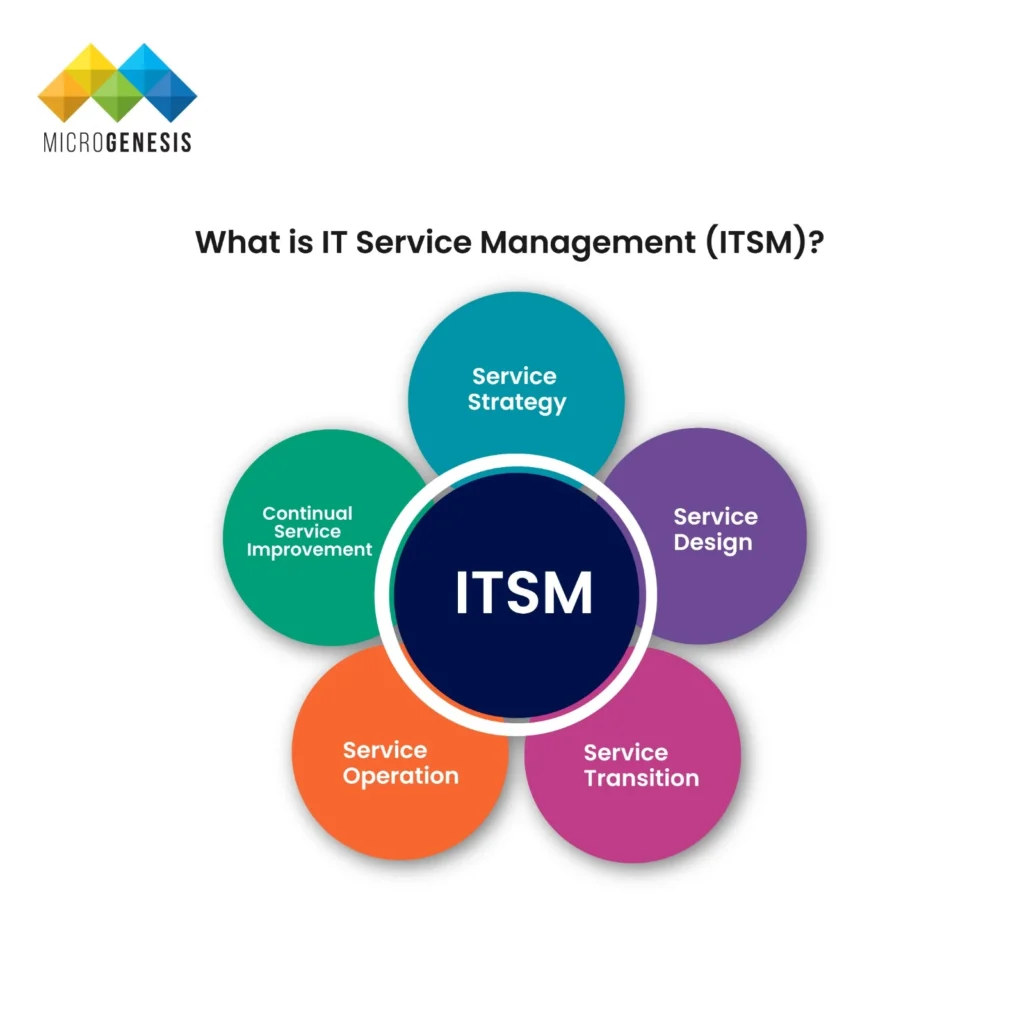
- Service Strategy:
This stage is concerned with planning what types of IT services your company needs and how they will support business functions. You also decide which services should be offered, who uses them and what value they provide. The aim here is to ensure that all your IT assets track according to your overall corporate strategy. At this point in time working with IT asset management software becomes very important as it helps you keep track of all your different kinds of information technology resources ensuring their optimal utilisation. - Service Design:
Once you have a strategy, it’s time for Service Design. This stage is about designing the IT services you planned in the strategy. You work out the details, like how the services will work, what processes you need, and what policies to follow. During this stage, IT service management tools help you design and document everything so that nothing is left to chance. - Service Transition:
Next comes Service Transition. This is where you take the services you designed and make them real. It’s about testing, deploying, and transitioning these services into your live environment. The goal is to ensure that the services are delivered smoothly and meet the requirements you set. Change management is a big part of this stage. It helps manage any changes to the services without causing disruption. IT management is key here, ensuring that every part of the transition is handled well. The focus of Service Transition is to deliver services on time, within budget, and with as little disruption as possible. - Service Operation:
Service Operation is where the services you’ve planned and designed are now being used every day. This phase deals with activities like responding to incidents, fulfilling requests, managing problems etc. The focus here is on delivering services at the agreed-upon levels and keeping customers happy. IT service management platforms are essential during this stage. They help manage and monitor the services to ensure everything is working as it should. - Continual Service Improvement:
The last stage involves continually improving your IT services by learning from past experiences and using that knowledge for future performance. This is where IT Asset Management becomes crucial. Understanding what is IT Asset Management and why is it important helps you track and manage resources effectively, ensuring services improve in both quality and efficiency. IT service management tools provide the insights needed to identify areas for enhancement.
What is an IT Service?
An IT service is any help or support related to technology that a business or person might need. This can include things like setting up computers, fixing software problems, or helping with online security. IT services make sure that all the technology in a company runs smoothly so people can do their jobs without issues. In 2023, Indian companies spent over ₹50,000 crores on IT services to keep their businesses running smoothly. This shows just how important IT services are. So, the next time you enjoy smooth online shopping or a trouble-free video call, remember there’s a strong IT service making it all work.
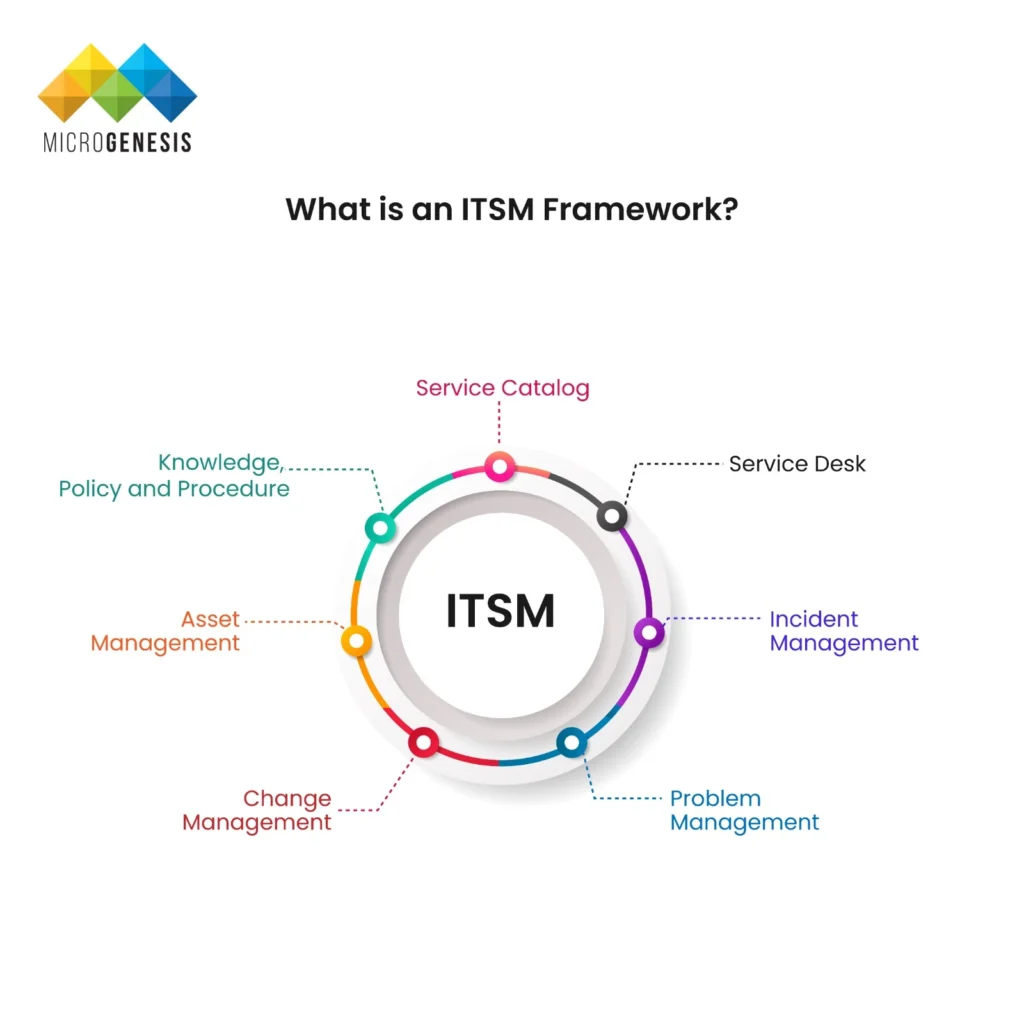
What is an ITSM Framework?
An ITSM framework is a set of guidelines that helps businesses manage their IT services more effectively. Think of it as a toolkit that helps ensure that IT services are well-organized and aligned with the business’s goals. It offers a structured way to design, deliver, and manage IT services so everything runs smoothly.
Now, let’s explore some of the most popular ITSM frameworks available.
Popular ITSM Frameworks
ITIL®
ITIL is one of the most well-known ITSM frameworks in the world. It was first introduced in the 1980s and has been a trusted guide for businesses looking to use IT for growth and change. Over the years, ITIL has evolved to stay up to date with modern needs, and the latest version, ITIL 4 is particularly useful today.
ITIL 4 helps businesses adapt their IT services to the current landscape, including trends like cloud computing, Agile, and DevOps. It introduces the ITIL Service Value System (SVS), which provides a clear approach for creating, delivering, and improving services continuously. The SVS includes key components such as the service value chain, ITIL practices, guiding principles, governance, and continual improvement.
ITIL 4 also introduces a four-dimensions model that ensures a balanced and holistic approach by focusing on organizations and people, information and technology, partners and suppliers, and value streams and processes.
COBIT
COBIT stands for Control Objectives for Information and Related Technologies. It is another popular ITSM framework that helps businesses manage IT governance and information management. COBIT is particularly useful for developing strong governance strategies and addressing risk management.
The latest version, COBIT 2019, has been updated to meet the challenges of today’s business environment, including new technologies and security concerns.
COBIT works well with other frameworks like ITIL and TOGAF, providing a unified approach to IT governance. COBIT’s Core Model includes 40 governance and management objectives, helping businesses create a solid governance structure and align IT goals with business objectives.
eTOM
The enhanced Telecom Operations Map (eTOM) is a framework tailored specifically for the telecommunications industry. It provides best practices, models, and standards to help businesses manage telecom services.
eTOM is organised into three main areas:
- Strategy, Infrastructure, and Product: Focuses on long-term planning and managing telecom infrastructure.
- Operations: Deals with day-to-day telecom service management.
- Enterprise Management: Covers overall business management strategies.
Using eTOM helps standardise processes and improves communication within teams thanks to its clear definitions and uniform language.
TOGAF
TOGAF (The Open Group Architecture Framework) helps businesses align their IT architecture with overall business goals. Originally developed in 1996, TOGAF has remained relevant by adapting to evolving business needs.
The core of TOGAF is the Architecture Development Method (ADM), which helps organisations manage the lifecycle of enterprise architecture.
The framework focuses on four key areas:
- Business Architecture: Defines business strategy and processes.
- Applications Architecture: Focuses on software applications and their interactions.
- Data Architecture: Manages data organisation and governance.
- Technical Architecture: Covers the technical infrastructure supporting the business.
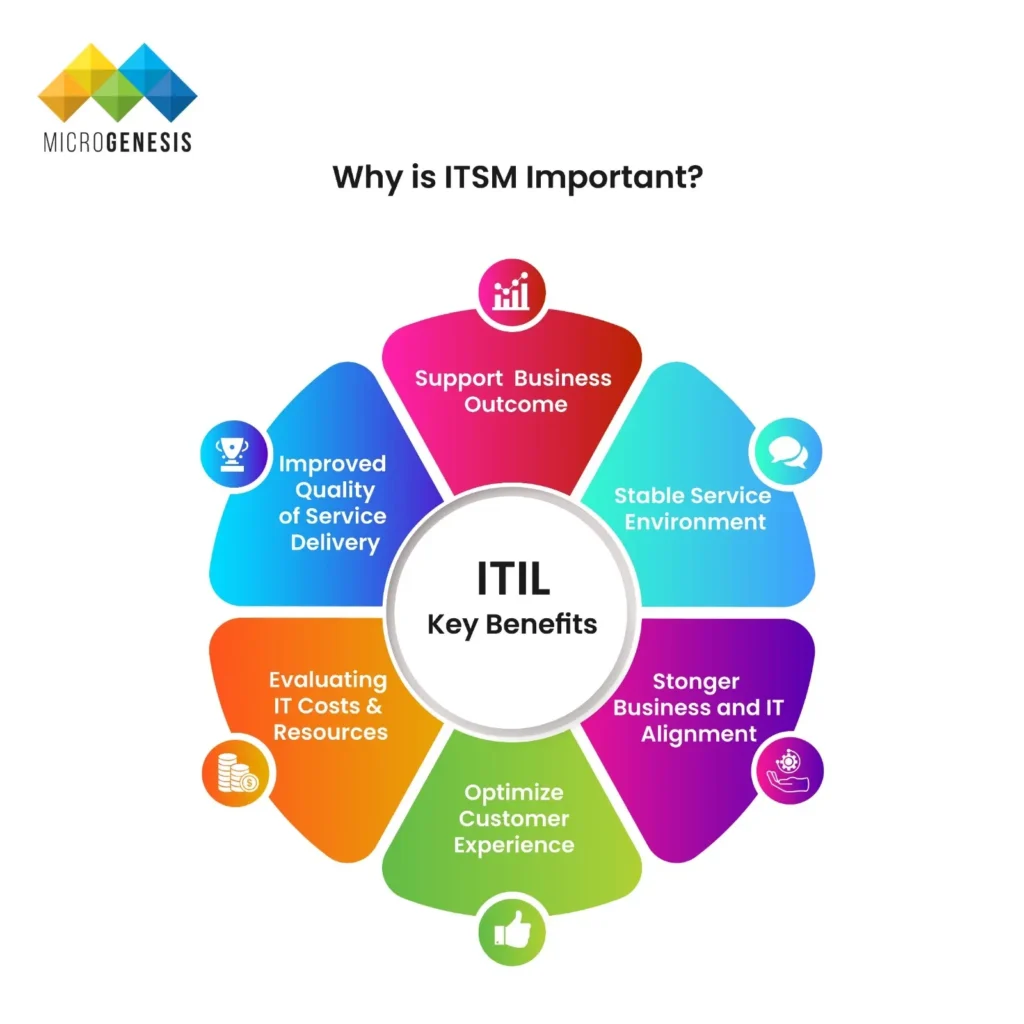
Why is ITSM Important?
ITSM includes many steps to help manage IT services well. These steps are key for making sure IT runs smoothly. A good IT asset management system covers all these areas.
Here’s a look at the main ITSM steps:
- Service request management deals with user requests. It makes sure they are logged, tracked, and sorted.
- Change management handles changes to the IT setup to avoid problems.
- Problem management finds and fixes the root causes of issues to stop them from happening again.
- Asset management tracks and manages IT assets. This is vital for a strong IT asset inventory management.
- Knowledge management keeps a central store of info, helping teams fix issues faster.
- Capacity management makes sure IT resources can meet current and future needs, which is a key part of ITSM best practices for service management.
- Project management in ITSM, especially IT services project management, makes sure IT projects are done on time and on budget, matching business goals.
These steps are not just about keeping things going. They are about improving IT services and making sure they give the most value to the business.
ITSM Software and Tools
Alright, so you’ve got a handle on IT Service Management. But what about the tools you need to actually manage it all? Imagine trying to cook a meal without any kitchen utensils—frustrating, right? The same goes for managing IT services. Without the right tools, you’re just making things harder for yourself. But with so many options out there, which ones should you pick? Don’t worry, we’ve got it sorted.
Now, let’s dive into some of the
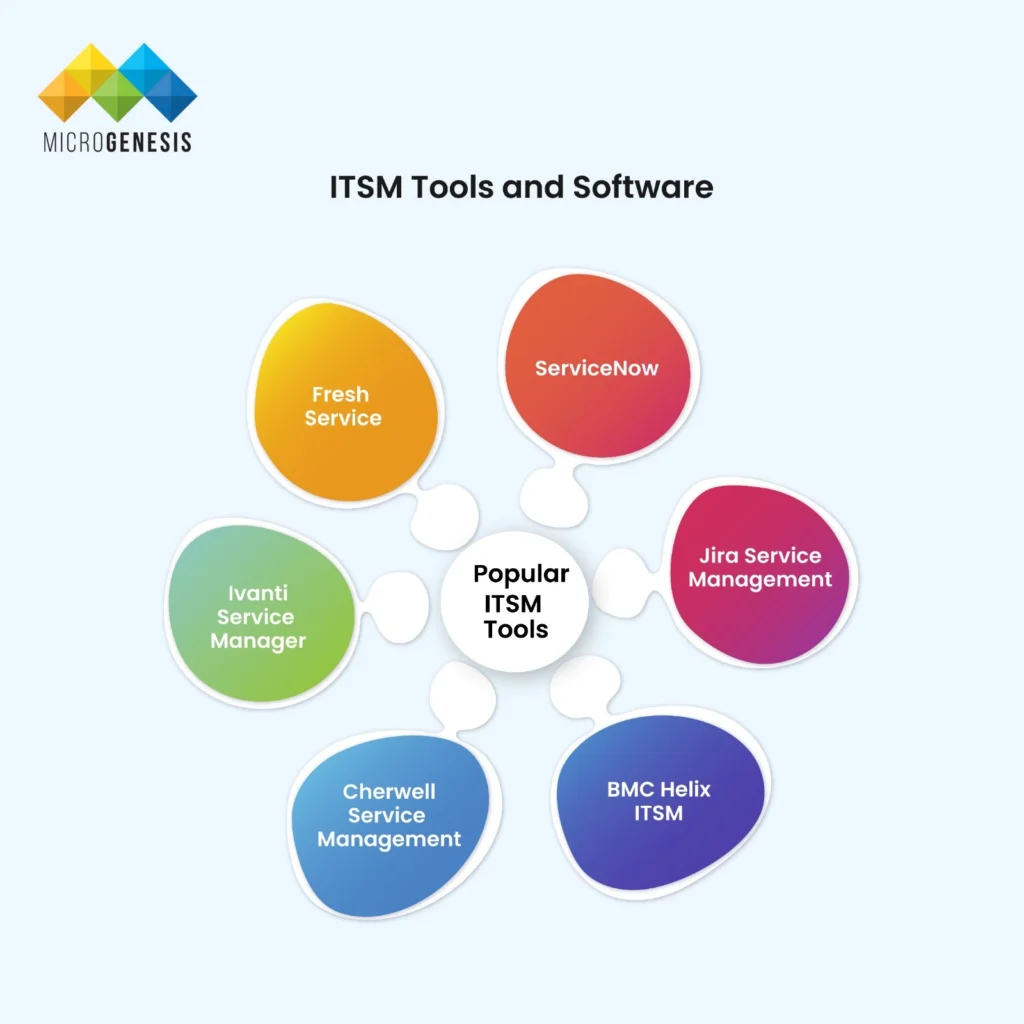
best ITSM tools out there:
-
ServiceNow:
When comparing
ServiceNow vs. Jira Service Desk for ITSM workflow management
, ServiceNow stands out as the Swiss Army knife of ITSM tools. It’s powerful, customizable, and highly regarded in the industry, frequently listed by Gartner as a top choice.
-
BMC Helix ITSM:
Known for its flexibility and smart features, BMC Helix helps streamline IT operations. It’s definitely one of the best ITSM tools available.
-
Jira Service Management (by Atlassian):
If you’re already using Jira for project management, this is a great choice. It integrates well and is perfect for teams working in agile environments.
-
Freshservice:
This tool is very user-friendly, making it a top pick for smaller businesses. It’s a solid option for teams new to IT service management tools.
-
Ivanti Neurons:
Ivanti Neurons stands out because it automates many IT tasks, making operations more efficient for your team.
-
ManageEngine ServiceDesk Plus:
If you’re looking for a budget-friendly tool with strong capabilities, this is a great option known for its reliability.
-
Cherwell:
Cherwell allows businesses to customize workflows without requiring deep technical expertise, making it ideal for organizations that need flexible solutions.
-
SolarWinds Service Desk:
This tool is designed specifically for IT teams and works well for managing incidents, changes, and assets.
So when evaluating these IT Service Management (ITSM) tools, consider how they can help you manage IT services efficiently, improve customer satisfaction, and support business growth. The right tool can make a significant difference.
Atlassian for Your ITSM Needs
When you think about IT service management (ITSM), one name often comes up—Atlassian. But why Atlassian? Atlassian offers tools like Jira Service Management that make managing IT tasks easier and faster.
Jira Service Management is trusted by over 65,000 organisations worldwide. That includes some of the biggest companies out there. This tool doesn’t just help you keep track of IT services; it actually helps you improve how your team works. Think of it as a toolkit that has everything you need in one place.
Another thing to like about Atlassian is how well it works with other tools. If you’re using Confluence for your documents or Bitbucket for code, everything connects smoothly. You don’t have to jump between different tools from different companies. Atlassian keeps it all together, making your work life simpler.
So, why should you care? Because in ITSM, getting things done quickly and correctly is key. Atlassian doesn’t just help you manage your services; it helps you do it better, making your team more efficient.
Final Thoughts
If you’re looking for a solid ITSM tool, Atlassian is a great choice. It’s not just about getting your tasks done; it’s about doing them well. With tools that are trusted around the world and proven to boost efficiency, Atlassian is a smart option.
But let’s face it—choosing the right ITSM tool can be confusing. With so many choices, how do you know which one is the best for your company? That’s where we can help.
MicroGenesis is a trusted ITSM consulting and services provider that helps organizations streamline IT operations, improve service delivery, and align IT services with business objectives. With expertise in ITSM best practices, process optimization, automation, and platform implementation, we enable businesses to build efficient, scalable, and customer-centric IT service management frameworks.