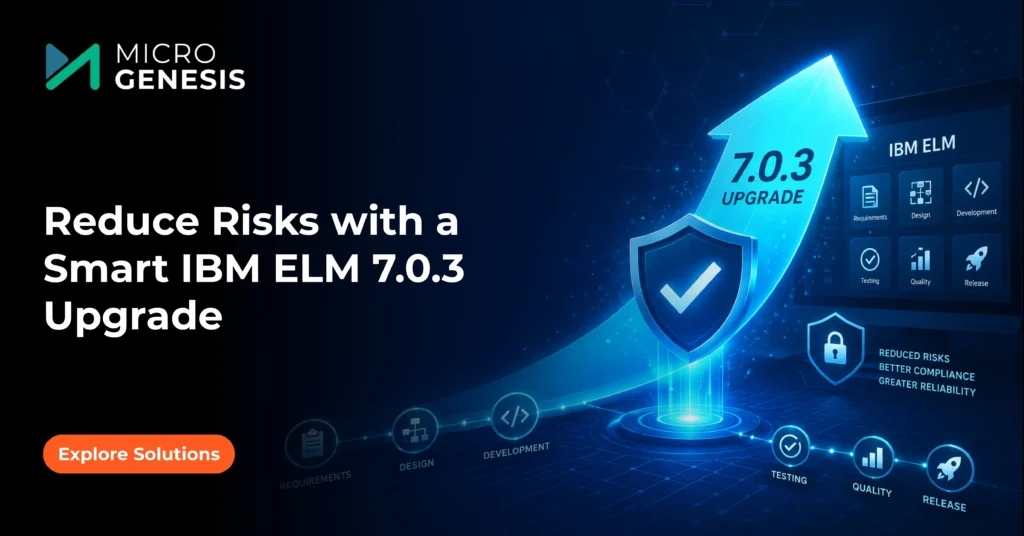

In the dynamic landscape of modern product development, software and product engineers are faced with the formidable challenge of creating smart, interconnected products. This complexity is compounded by the need to adhere to rigorous regulatory and safety standards while accommodating diverse design requirements. Enter Engineering Lifecycle Management (ELM) from IBM, a transformative solution that not only enhances collaboration and productivity but also provides a comprehensive view of the entire product lifecycle.
In this blog, we’ll explore seven compelling reasons why ELM should be on your radar.
1. End-to-End Engineering Lifecycle Management:
Success in today’s environment hinges on having a system that manages the entire engineering lifecycle. IBM’s ELM suite offers a comprehensive solution that encompasses requirements management, systems design, modeling, and testing. These tools are regarded as the gold standard for systems engineering, Application Lifecycle Management (ALM), and DevOps at an enterprise scale.
2. Seamless Collaboration in a Dispersed World:
With engineering teams often spread across the globe or working remotely, effective communication and collaboration are paramount. ELM tools from IBM empower engineers to create and monitor progress across work items. They facilitate adherence to Agile, SAFe, or custom processes, ensuring consistent work across the entire engineering lifecycle.
3. Change Management and Version Control:
Flexibility in change management is a key feature of ELM. It provides a unified view of the truth, allowing different roles—software engineers, systems architects, product managers—to coordinate and synchronize projects at different paces. This fosters full visibility and traceability, from individual requirements to test cases, as well as robust version and variant management.
4. Future-Ready Knowledge Management:
ELM acts as a knowledge network for your engineering data, preparing your organization for the future by constructing a reusable linked data set. It seamlessly integrates with applications supporting Open Services for Lifecycle Collaboration (OSLC), facilitating scalable engineering operations for complex projects and improved delivery cycles.
Also Read: Tips for getting started with IBM ELM and ensuring a smooth rollout
5. Effective Variant and Version Management:
Just like managing source code, ELM offers robust control over variants and versions for all engineering data. This includes the ability to branch, merge, and baseline engineering data, thereby promoting the reuse of changes across variants. The outcome is enhanced productivity, quality, and cost-effectiveness in product development.
6. Leveraging AI for Efficiency:
ELM integrates pre-defined industry solutions and innovative AI-driven features to stay at the forefront of engineering standards. By harnessing the power of AI, ELM provides real-time insights into engineering data. This proactive approach helps detect errors early in the product lifecycle, preventing costly rework and schedule disruptions. The result is smarter, safer, and more cost-effective product development.
7. Industry Trust and Recognition:
ELM from IBM enjoys the trust of nine out of ten major automotive companies and nine out of ten leading pharmaceutical companies. Furthermore, industry insights from IDC underscore IBM’s pivotal role in digital transformation within product development.
Also Read: Mastering Digital Requirements Management: A Comprehensive Guide
In conclusion, when considering investments in engineering tools, ELM emerges as a compelling choice. The need for enhanced productivity and cost reduction is paramount, and ELM stands out as a game-changing solution. As IBM Partners, MicroGenesis is here to assist you on this journey. If you’re ready to explore how IBM ELM tool can revolutionize your engineering practices, please don’t hesitate to reach out.