
Managing requirements becomes increasingly difficult as engineering projects grow in size, involve multiple teams, and face strict quality or compliance expectations. Requirements may change throughout development, while design, testing, verification, and stakeholder decisions continue to evolve.
A modern requirements management tool helps engineering teams keep this information organized, connected, and traceable throughout the product lifecycle.
IBM DOORS Next is designed for organizations that need structured requirements management, collaboration, traceability, and integration across engineering activities. It is particularly relevant to complex development environments where teams need greater control over requirements and their relationships with downstream engineering work.
This guide explains how DOORS requirements management works, what DOORS Next offers, how organizations can approach implementation and migration, and where expert IBM ELM consulting can add value.
What Is DOORS Requirements Management?
DOORS requirements management is the structured process of capturing, organizing, reviewing, tracing, and maintaining requirements throughout a product or system lifecycle using IBM DOORS technologies.
Effective requirements management helps teams understand what must be built, why it is needed, how changes affect the project, and whether each requirement has been properly verified.
For organizations managing complex engineering programs, requirements should not remain isolated in documents or spreadsheets. They need to be connected with the activities that transform those requirements into an engineered product.
What Is IBM DOORS Next?
IBM DOORS Next is a requirements management solution within IBM Engineering Lifecycle Management that helps teams define, organize, review, trace, and manage requirements across complex engineering projects.
It provides a structured environment for managing requirements while supporting collaboration and connections with other lifecycle activities.
This makes IBM engineering requirements management particularly relevant for organizations working across systems engineering, software engineering, hardware development, testing, verification, and compliance processes.
If you are new to the broader concept, our guide on what is Engineering Lifecycle Management explains how requirements management fits into the wider engineering lifecycle.
Why Requirements Management Matters in Complex Engineering
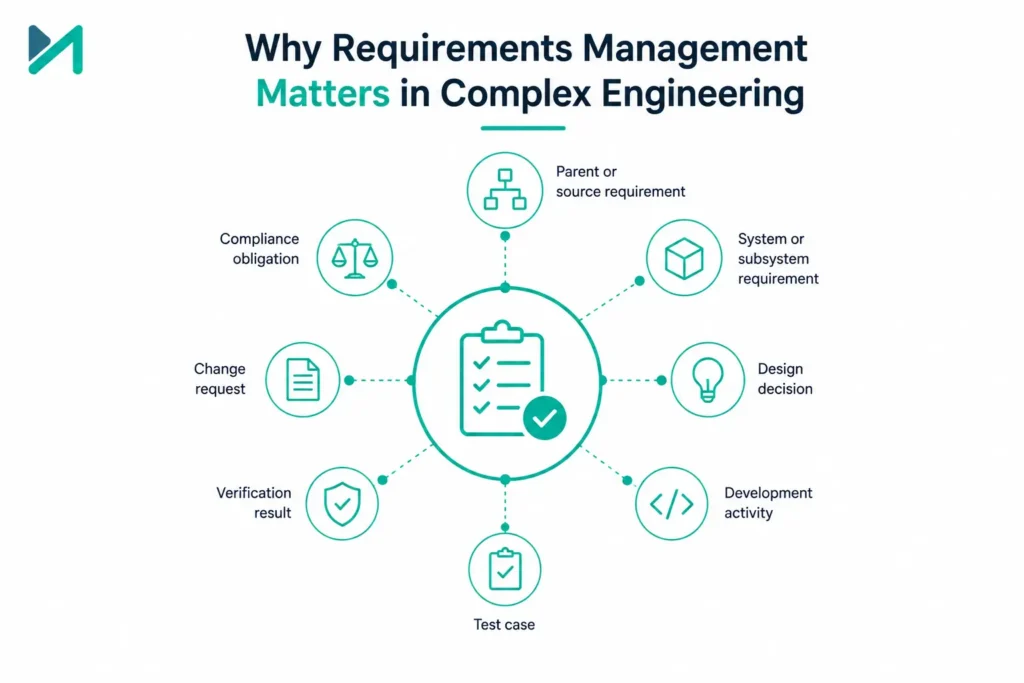
Requirements are the foundation for engineering decisions. If requirements are unclear, incomplete, duplicated, or difficult to trace, problems can appear later during design, development, testing, or verification.
A structured requirements management software environment helps teams create a reliable connection between what stakeholders expect and what engineering teams deliver.
For example, a requirement may need to connect with:
- A parent or source requirement
- A system or subsystem requirement
- A design decision
- A development activity
- A test case
- A verification result
- A change request
- A compliance obligation
This connected approach is especially important when products contain multiple interacting systems or when several engineering teams contribute to the same program.
Key Capabilities of DOORS Next
Organizations evaluating DOORS Next typically look at several core capabilities before deciding whether it fits their requirements management strategy.
Requirements Authoring and Organization
DOORS Next provides an environment for creating and organizing requirements in a structured manner.
Teams can define requirements, arrange related information, manage attributes, and organize requirements according to the structure of their engineering program.
A well-designed structure makes requirements easier to find, review, maintain, and reuse.
It also provides a foundation for establishing relationships between different levels of requirements.
DOORS Requirements Traceability
DOORS requirements traceability is the ability to establish and maintain relationships between requirements and related engineering artifacts throughout the lifecycle.
Traceability helps teams determine where a requirement originated, what it affects, and whether corresponding engineering and verification activities have addressed it.
For complex projects, this can become one of the most valuable aspects of a requirements management environment.
Teams can use traceability to investigate questions such as:
- Which higher-level requirement does this requirement support?
- Which design element addresses it?
- Which test verifies it?
- What could be affected if it changes?
- Which requirements remain without verification?
A strong traceability structure also supports more informed change impact analysis.
Requirements Traceability and the Digital Thread
Requirements are only one part of a modern engineering lifecycle.
A requirement may begin with a stakeholder need and eventually influence system architecture, detailed design, implementation, testing, verification, and release decisions.
Connecting these relationships creates a more complete view of the engineering lifecycle.
This approach supports the broader concept of a digital thread, where important engineering information remains connected instead of being maintained as isolated records across separate systems.
Organizations interested in this broader approach can explore our complete guide to Engineering Lifecycle Management.
Version Control and Change Management
Requirements rarely remain unchanged throughout a complex project.
Stakeholder expectations may change. Regulations may evolve. Design constraints may emerge. Engineering teams may discover dependencies that were not understood during initial requirements definition.
A requirements management environment therefore needs to support controlled changes.
With appropriate version and configuration management practices, teams can understand how requirements have evolved and maintain appropriate historical information.
This becomes particularly important when teams need to determine which requirements applied to a particular product configuration, release, baseline, or development stage.
Collaboration and Reviews
Requirements are rarely created by one person.
Systems engineers, product owners, customers, domain experts, software engineers, hardware engineers, testers, quality teams, and other stakeholders may all contribute to the requirements process.
DOORS Next supports collaborative requirements activities so that stakeholders can participate in reviews and discussions within the requirements environment.
The goal is to make decisions easier to understand and keep relevant context connected to the requirement rather than scattered across email threads, documents, or separate communication channels.
Requirements Workflows
Different organizations follow different requirements processes.
Some projects may use formal approval stages, while others may follow more iterative engineering practices.
A requirements workflow can define how information moves through activities such as:
Draft → Review → Approval → Baseline → Change → Reapproval
The exact workflow should reflect the organization’s engineering governance rather than adding unnecessary steps.
Good workflow design provides control without making requirements management difficult for engineering teams to use.
Reporting and Requirements Visibility
Engineering leaders need visibility into the state of requirements without manually reviewing every requirement record.
Requirements reporting can help teams understand areas such as:
- Requirement status
- Review progress
- Traceability coverage
- Approval status
- Changes
- Missing relationships
- Requirement completeness
- Verification coverage
The objective is not simply to generate more reports. The objective is to provide useful information for engineering decisions.
Organizations with complex reporting requirements may benefit from specialist expertise. Our article on why IBM ELM reporting still requires an expert explores this topic in greater detail.
Integration Across the Engineering Lifecycle
Requirements become significantly more useful when they are connected with other engineering activities.
DOORS Next can form part of an IBM Engineering Lifecycle Management environment alongside capabilities for workflow management, testing, modeling, and other engineering processes.
This helps organizations move toward a connected engineering environment instead of managing requirements independently from development and verification.
For example, a typical lifecycle may connect:
Requirements → Design → Development → Testing → Verification
The exact architecture depends on the organization’s processes, tools, and integration requirements.
DOORS Next and Engineering Lifecycle Management
DOORS Next should not be viewed only as an isolated requirements management tool.
It can be part of a broader IBM Engineering Lifecycle Management strategy where requirements, development, testing, workflow, and other engineering activities are connected.
This matters when organizations need visibility across the complete product development lifecycle.
Our article on the core components of Engineering Lifecycle Management provides additional context on how these capabilities work together.
When Should You Consider DOORS Next?
DOORS Next can be worth evaluating when your organization is dealing with requirements complexity that is becoming difficult to manage using disconnected documents, spreadsheets, or legacy processes.
Common situations include:
- Large engineering programs
- Multiple teams working on interconnected systems
- Strict traceability requirements
- Frequent requirement changes
- Complex verification processes
- Regulated product development
- Distributed engineering teams
- Need for lifecycle integration
- Existing IBM ELM environments
- Modernization of legacy requirements processes
The decision should ultimately be based on your engineering requirements, existing technology landscape, project complexity, and long-term lifecycle strategy.
DOORS Next for Systems Engineering
Systems engineering depends heavily on understanding relationships between stakeholder needs, system requirements, architecture, design, implementation, and verification.
A structured requirements environment can provide the foundation for managing these relationships.
DOORS Next is therefore relevant to organizations developing complex systems where requirements must remain connected across multiple engineering disciplines.
This is particularly useful in industries such as:
- Automotive
- Aerospace and defense
- Medical devices
- Industrial manufacturing
- Transportation
- Electronics
- Other safety or compliance-sensitive engineering environments
For organizations looking at the wider relationship between requirements and systems engineering, our guide to Engineering Lifecycle Management provides a broader perspective.
What Makes DOORS Requirements Management Different From Document-Based Approaches?
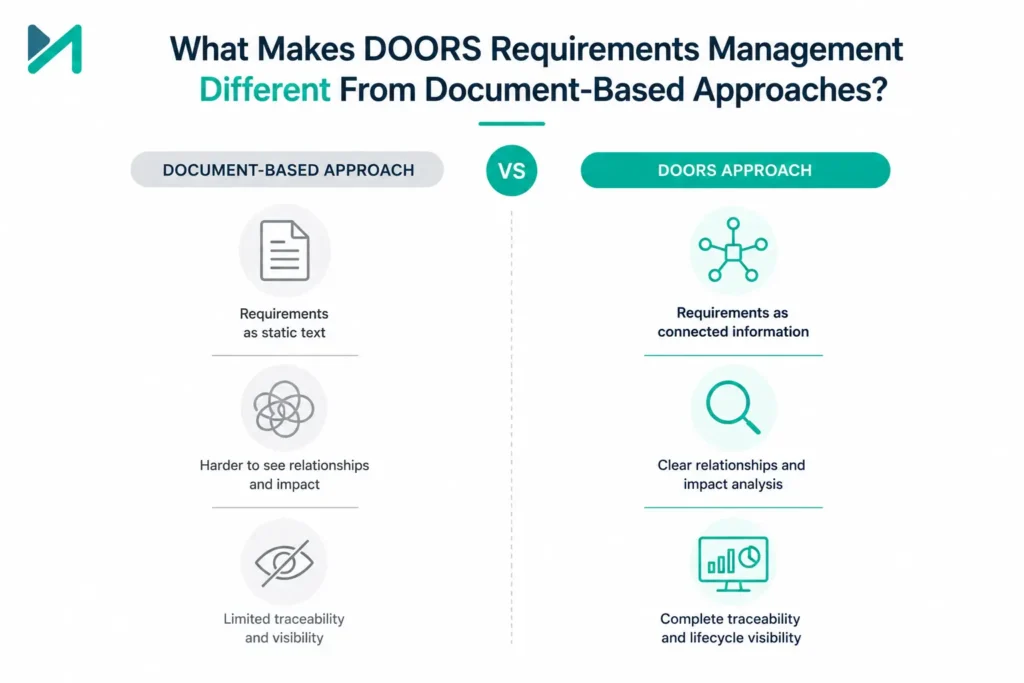
Traditional document-based requirements management can work for smaller or less complex projects. However, as the number of requirements and relationships increases, maintaining consistency manually becomes more difficult.
A document may tell you what a requirement says, but it may not provide an efficient way to understand every relationship surrounding that requirement.
A dedicated DOORS requirements management tool is designed around structured requirements and their relationships.
This allows teams to work with requirements as connected engineering information rather than treating them only as static text.
That distinction becomes increasingly important when organizations need traceability, change impact analysis, controlled reviews, and lifecycle visibility.
Is DOORS Next Right for Your Organization?
The right requirements management platform depends on the complexity of your engineering environment.
DOORS Next may be a strong fit when your organization needs:
- Structured requirements management
- End-to-end traceability
- Controlled requirements changes
- Engineering collaboration
- Lifecycle integration
- Requirements reporting
- Support for complex engineering programs
- A broader IBM ELM environment
However, selecting the platform is only one part of the decision.
The implementation model, requirements structure, workflows, integrations, migration strategy, reporting, and user adoption can have a significant effect on the value you receive from the platform.
That is why organizations evaluating IBM requirements management should assess both the technology and the implementation approach before moving forward.
IBM DOORS vs DOORS Next: What Is the Difference?
Organizations using IBM DOORS may eventually evaluate DOORS Next as part of a requirements management modernization strategy. The decision involves more than comparing features. Teams need to consider their existing data, traceability, integrations, workflows, reporting, and future engineering requirements.
Traditional DOORS environments can support established requirements processes, while DOORS Next provides a modern web-based requirements management environment within IBM Engineering Lifecycle Management.
Before deciding between the platforms, organizations should assess:
- Existing requirements and modules
- Requirement relationships and traceability
- Baselines and historical information
- User roles and permissions
- Existing integrations
- Reporting requirements
- Configuration management
- Testing and verification processes
- Compliance needs
- Migration complexity
For teams comparing requirements platforms, our guide on IBM DOORS Next vs Polarion provides additional context.
When Should You Consider Upgrading to DOORS Next?
Upgrading to DOORS Next can be considered when an existing requirements environment no longer provides the collaboration, integration, traceability, or lifecycle capabilities an organization needs.
Common reasons include:
Legacy requirements environment
Long-running engineering programs can accumulate complex structures, custom configurations, historical data, and integrations. Over time, maintaining this environment can become increasingly difficult.
Distributed engineering teams
Engineering programs often involve teams working across locations, disciplines, suppliers, and partner organizations. A modern requirements environment can provide a more accessible way to collaborate on requirements.
Need for lifecycle traceability
Requirements need to connect with design, development, testing, verification, and change activities. Organizations may consider DOORS Next when they want requirements to participate more effectively in a connected ELM environment.
Increasing reporting requirements
Engineering leaders may require clearer visibility into requirement status, traceability, reviews, changes, and verification coverage.
Digital engineering initiatives
Organizations moving toward digital engineering, systems engineering, or broader ELM strategies may use modernization as an opportunity to reassess their requirements architecture.
Upgrading should not begin with data migration alone. The organization should first understand its existing requirements environment and define what the future state needs to achieve.
Migrating from DOORS to DOORS Next
Migrating from DOORS to DOORS Next involves moving requirements and their associated engineering information into the target environment while preserving the relationships and structures that are important to the project.
Depending on the existing environment, migration planning may involve:
- Requirements
- Attributes
- Hierarchies
- Modules
- Links
- Baselines
- Views
- Documents
- Project structures
- User information
- Historical information
- Traceability relationships
A successful migration therefore begins with assessment and planning rather than simply exporting and importing data.
Step 1: Assess the Existing DOORS Environment
Start by documenting the current requirements environment.
Identify:
- Projects
- Requirements
- Modules
- Attributes
- Traceability relationships
- Integrations
- Reports
- User groups
- Permissions
- Baselines
- Archived information
This assessment helps determine what should be migrated, redesigned, archived, or retired.
Step 2: Classify the Existing Data
Not every piece of historical information necessarily needs the same treatment.
Data can be classified according to its business and engineering value.
Active data supports current or planned engineering activities.
Reference data may need to remain available for historical analysis, audits, or future reference
Obsolete data may no longer need to be part of the active requirements environment.
This classification can help organizations avoid transferring unnecessary complexity into the new platform.
Step 3: Design the Target DOORS Next Environment
The target environment should be designed before production migration begins.
Define:
- Project structures
- Components
- Requirements organization
- Modules
- Collections
- Attributes
- Relationships
- Roles
- Permissions
- Workflows
- Reporting requirements
This is also an opportunity to simplify legacy structures instead of reproducing every historical configuration.
Step 4: Plan Requirements Traceability
Traceability deserves special attention during migration.
A requirement without its relationships may lose important engineering context.
Teams should determine which relationships need to be preserved and how they should be represented in the target environment.
This is particularly important when DOORS requirements traceability supports verification, validation, compliance, or change impact analysis.
Step 5: Validate the Migrated Environment
Migration validation should go beyond checking whether data has been imported successfully.
Teams should verify:
- Requirements
- Attributes
- Hierarchies
- Links
- Traceability
- Baselines
- Permissions
- Reports
- Integrations
- Search functionality
- Review workflows
The objective is to confirm that the migrated environment supports the engineering process as expected.
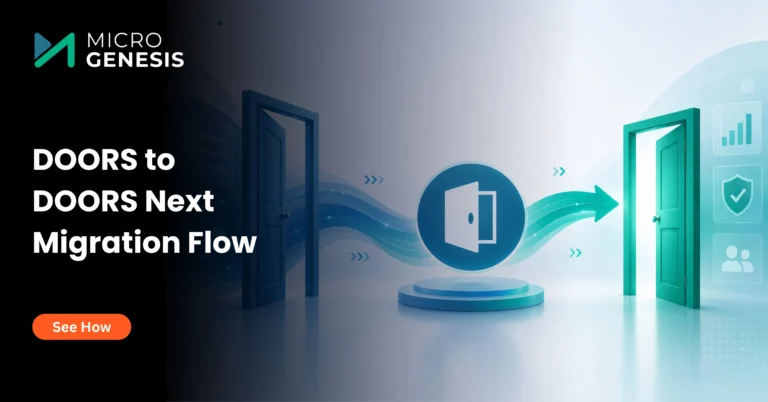
For a detailed migration approach, see our guide on migrating from DOORS to DOORS Next.
Common DOORS Next Migration Challenges
A DOORS Next migration can become complicated when the existing environment contains years of customizations and project-specific processes.
Legacy complexity
Older environments may contain structures that are difficult to interpret or replicate. A detailed assessment can help distinguish essential configurations from outdated ones.
Requirements volume
Large engineering programs can contain substantial quantities of requirements and relationships. Migration planning should account for data volume, validation, performance, and project timelines.
Traceability dependencies
Requirements may be connected to design, testing, change management, or other engineering artifacts. These relationships need to be considered as part of the migration strategy.
Integration dependencies
Existing DOORS environments may connect with other engineering and development systems. Each integration should be reviewed before defining the target architecture.
Reporting changes
Reports created for the legacy environment may need to be redesigned or rebuilt for the new architecture.
User adoption
A technically successful migration can still face resistance if engineers are not prepared for changes to their daily workflows.
For these reasons, migrating to DOORS Next should be treated as a structured engineering transformation rather than a simple data transfer exercise.
DOORS Web Access and Requirements Management
DOORS Web Access (DWA) provides browser-based access to requirements information and can support collaboration with stakeholders who need to work with requirements through a web interface.
For organizations working with legacy DOORS environments, understanding the role of web-based requirements access can be part of a broader modernization discussion.
If your organization is evaluating DWA and its role in requirements management, explore our guide on Mastering Requirements with IBM DOORS Web Access.
Integrating DOORS Next With Other Engineering Tools
Requirements rarely exist independently from the rest of the product development process.
An integrated engineering environment may connect requirements with:
- Engineering Workflow Management
- Engineering Test Management
- Systems modeling
- Development activities
- Change management
- Testing
- Verification
- Enterprise work management tools
The integration strategy should be based on business requirements and clear ownership of information.
The objective is not necessarily to replicate the same data across multiple platforms. Instead, each system should have a clearly defined role while relevant relationships are maintained between them.
DOORS and Jira Integration
Organizations that use Jira for development or work management may also evaluate how Jira can work alongside their requirements environment.
A typical division of responsibilities could be:
DOORS Next: Requirements, specifications, and requirements traceability
Jira: Development tasks, team execution, and work tracking
The appropriate architecture depends on the organization’s processes and integration requirements.
Before implementing an integration, teams should determine:
- Which system owns requirements
- Which system owns development work
- What information needs to be synchronized
- Which relationships need to be visible
- How changes should be handled
- How traceability should be maintained
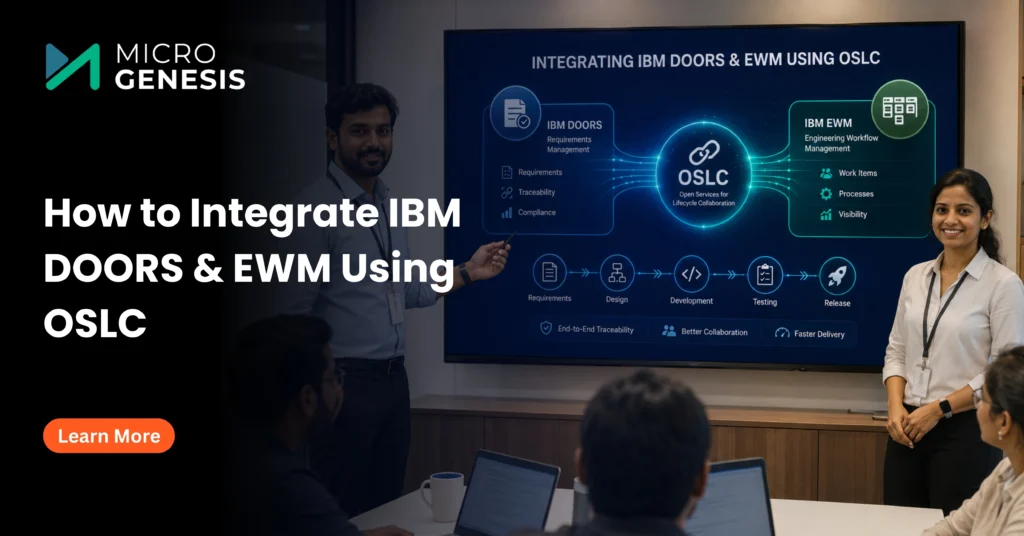
For organizations working with IBM engineering tools, our guide on integrating IBM Engineering Requirements Management DOORS and Engineering Workflow Management using OSLC provides additional information.
DOORS Next for Automotive Requirements Management
Automotive development involves multiple engineering disciplines working together across increasingly complex vehicle systems.
An automotive requirements management system needs to support relationships between vehicle-level requirements, system requirements, software, hardware, interfaces, safety considerations, and verification activities.
DOORS Next can form part of an automotive requirements management environment where requirements need to remain connected across the engineering lifecycle.
Typical requirements may include:
- Vehicle requirements
- System requirements
- Software requirements
- Hardware requirements
- Interface requirements
- Safety requirements
- Performance requirements
- Verification requirements
- Supplier requirements
Traceability is particularly important when a change to one requirement can affect several downstream engineering activities.
Organizations working on complex automotive programs can also explore our content on addressing complexity in EV system design and development using IBM ELM.
DOORS Next for Aerospace Requirements Management
Aerospace programs often involve complex systems, extensive requirements structures, multiple engineering teams, and detailed verification processes.
An aerospace requirements management tool should help teams maintain relationships between requirements, design activities, verification activities, and supporting engineering evidence.
DOORS Next can support this type of structured requirements environment as part of a broader engineering lifecycle strategy.
However, the use of a requirements management platform alone does not establish regulatory compliance. Compliance depends on the complete engineering process, applicable standards, organizational controls, verification activities, and required evidence.
DOORS Next for Systems Engineering and MBSE
Requirements management plays an important role in systems engineering because system requirements need to remain connected with architecture, design, implementation, and verification.
Model-Based Systems Engineering (MBSE) is an approach that uses system models as an important source of engineering information instead of relying exclusively on document-based processes.
DOORS Next can participate in an engineering environment where requirements are connected with models and other lifecycle artifacts.
This can help teams move toward a more connected digital engineering approach.
Organizations exploring the relationship between requirements and systems engineering can also review our guide on Rhapsody Model Manager.
Best Practices for DOORS Requirements Management
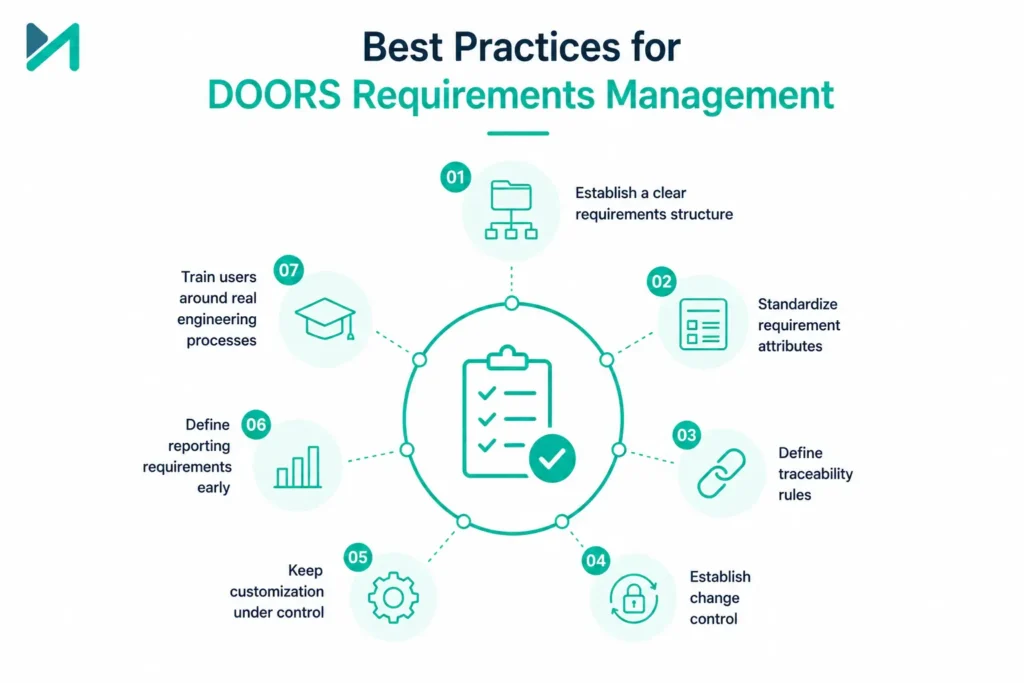
Implementing a requirements management platform successfully requires attention to both technology and engineering processes.
Establish a clear requirements structure
Define how stakeholder, system, subsystem, software, hardware, interface, and verification requirements should be organized.
A consistent structure makes requirements easier to manage and reduces confusion as projects grow.
Standardize requirement attributes
Use attributes that provide meaningful engineering information without creating unnecessary complexity.
A controlled attribute strategy can make reporting and filtering more useful.
Define traceability rules
Determine which relationships should be mandatory.
For example, an organization may require system requirements to have defined sources and appropriate verification relationships.
Establish change control
Requirements should follow an agreed process for review, approval, modification, and baselining.
This helps teams understand why changes occurred and which engineering activities may be affected.
Keep customization under control
Customization can help align DOORS Next with business processes, but unnecessary customization can make administration and future changes more difficult.
The goal should be to configure the platform around genuine engineering needs.
Define reporting requirements early
Determine which reports engineers, project managers, quality teams, and leadership need before the implementation is finalized.
This allows the requirements architecture to support meaningful reporting from the beginning.
Train users around real engineering processes
Training should demonstrate how users will create, review, trace, modify, and manage requirements within their actual workflows.
Feature-based training alone is rarely enough for a successful requirements management transformation.
Why IBM ELM Implementation Expertise Matters
Selecting DOORS Next is only one part of a successful requirements management initiative.
The way the environment is structured can affect usability, traceability, reporting, integrations, migration effort, and long-term maintenance.
An experienced IBM ELM implementation partner can help organizations with:
- Requirements management strategy
- DOORS Next implementation
- Legacy DOORS migration
- Requirements traceability
- ELM architecture
- Workflow configuration
- Tool integration
- Reporting
- Process consulting
- User enablement
- Ongoing optimization
MicroGenesis provides IBM Engineering Lifecycle Management services for organizations looking to implement, modernize, integrate, or optimize their engineering lifecycle environment.
Our team can help evaluate your existing requirements environment, define a target architecture, plan migration activities, establish traceability, and align the solution with your engineering processes.
How MicroGenesis Can Help With DOORS Next
Moving to a modern requirements management environment requires more than technical configuration. Engineering processes, data structures, integrations, users, and reporting all need to work together.
MicroGenesis helps organizations approach IBM ELM initiatives from both the technology and engineering process perspective.
Our services can support organizations with:
DOORS Next implementation: Configure the environment around defined requirements management processes.
DOORS migration: Assess existing DOORS environments and plan the transition to a modern requirements architecture.
Requirements traceability: Establish relationships between requirements and relevant engineering artifacts.
IBM ELM integration: Connect requirements management with other engineering lifecycle activities.
Process consulting: Align requirements workflows and governance with engineering objectives.
Reporting and optimization: Improve visibility into requirements and lifecycle information.
This approach helps organizations avoid treating DOORS Next as simply another software deployment. Instead, the focus is on building a requirements management environment that supports long-term engineering objectives.
Ready to Modernize Your DOORS Requirements Management?
If your organization is evaluating IBM DOORS Next, planning an upgrade, or considering migrating from DOORS to DOORS Next, the first step should be understanding your current environment and defining the desired future state.
A structured assessment can help identify:
- What should be migrated
- What should be redesigned
- Which integrations are required
- How traceability should work
- Which reports are needed
- How users will work in the new environment
- What implementation approach is appropriate
MicroGenesis can help you evaluate your requirements management environment and develop a practical roadmap for implementation or modernization.
If you are looking for IBM engineering requirements management, DOORS requirements management, DOORS Next migration, or requirements management consulting, contact our IBM ELM experts to discuss your requirements and next steps.
You can also explore our IBM Engineering Lifecycle Management services to understand how MicroGenesis can support your engineering transformation.
Frequently Asked Questions About DOORS Next
What is DOORS requirements management?
DOORS requirements management is the structured process of creating, organizing, reviewing, tracing, changing, and maintaining requirements throughout an engineering lifecycle using IBM DOORS technologies.
What is IBM DOORS Next?
IBM DOORS Next is a requirements management application within IBM Engineering Lifecycle Management that helps teams manage requirements, relationships, reviews, and traceability across engineering projects.
What is DOORS requirements traceability?
DOORS requirements traceability is the practice of linking requirements with related requirements and engineering artifacts to understand dependencies, coverage, verification, and potential impact when requirements change.
Why are organizations migrating from DOORS to DOORS Next?
Organizations may consider migrating from DOORS to DOORS Next to modernize requirements management, support current collaboration needs, improve lifecycle integration, and align requirements processes with a broader IBM ELM strategy.
What is DOORS Next migration?
DOORS Next migration is the process of moving requirements and relevant engineering information from an existing DOORS environment into DOORS Next while planning for structures, attributes, relationships, configurations, integrations, and validation.
Is DOORS Next suitable for automotive requirements management?
DOORS Next can support automotive requirements management by providing structured requirements and traceability across engineering activities. The implementation should be aligned with the organization’s product development processes, engineering governance, and applicable industry requirements.
Is DOORS Next suitable for aerospace requirements management?
DOORS Next can support aerospace requirements management by organizing requirements and connecting them with related engineering and verification activities. Project compliance depends on the complete engineering process, controls, evidence, and applicable standards.
Can DOORS Next integrate with Jira?
DOORS Next can be integrated into an environment that also uses Jira, depending on the organization’s integration architecture and information requirements. Teams should clearly define system ownership, synchronization needs, relationships, and traceability before implementing the integration.
How should I start a DOORS Next migration?
Start with an assessment of the existing DOORS environment. Review requirements, modules, attributes, relationships, baselines, integrations, reports, users, and historical information before defining the target architecture and migration strategy.
Do organizations need an IBM ELM implementation partner?
An implementation partner can be valuable when an organization has complex requirements, migration, integration, reporting, or engineering process needs. Specialist expertise can help align the ELM environment with business and engineering objectives.