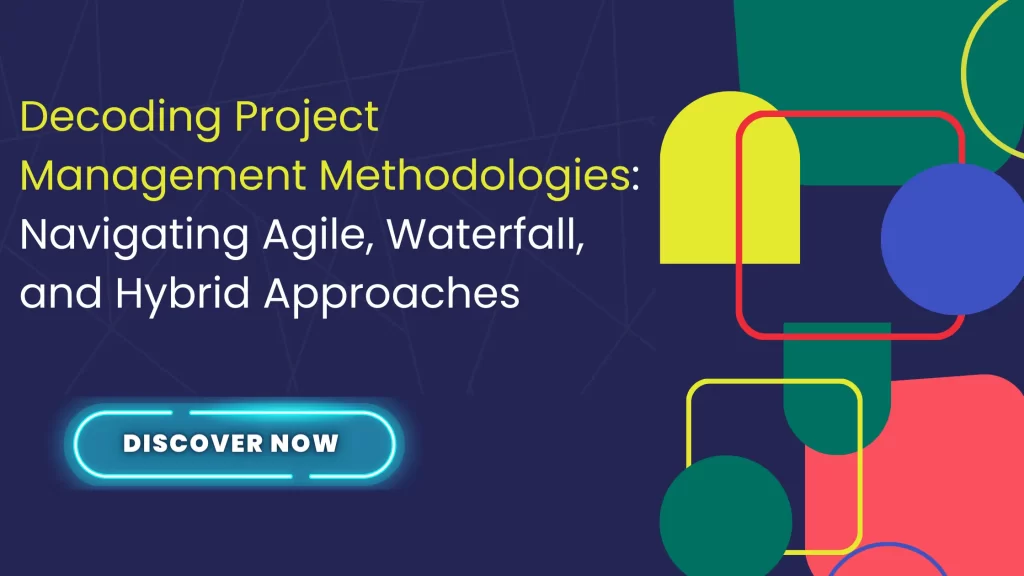
In the dynamic world of project management, methodologies play a crucial role in determining the success and efficiency of a project’s execution. There are three main ones: Agile, Waterfall, and Hybrid.
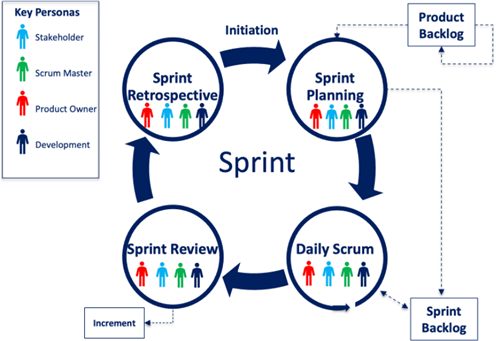
Agile is about being flexible. It focuses on teamwork, feedback from customers, and being able to change things quickly. Instead of finishing everything at once, Agile does it bit by bit, so teams can adjust as they go. Agile has different versions like Scrum and Kanban, which help teams work together better.
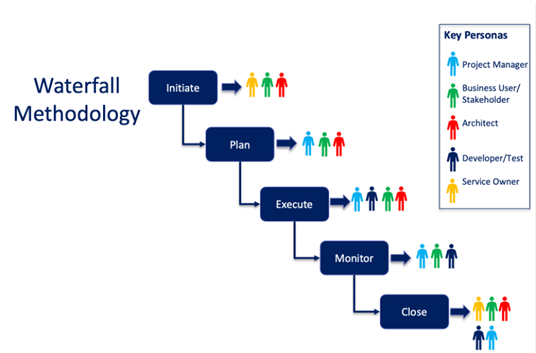
Waterfall is more straightforward. It goes step by step through a project, like gathering ideas, making plans, building, testing, and finishing. Each step depends on the one before it. This method is good for projects where everything is pretty clear from the start.
Hybrid is a mix of both. It takes the flexibility of Agile and the structure of Waterfall and puts them together. This lets teams be adaptable but still have a plan to follow. It’s helpful when a project needs both careful planning and the ability to change.
These methods help teams manage projects in different ways. By understanding them, teams can choose the best approach for their project and make sure things run smoothly from start to finish.
Which Methodology to USE?
WATERFALL:
The waterfall model is a way of managing projects where everything is planned out beforehand. The project manager creates a plan with all the tasks and requirements, and then the team follows this plan step by step until the project is finished.
Tasks are completed in the same order they were planned. This is why it’s called the waterfall model – tasks flow down in a sequence like waterfalls.
While the waterfall method is common, it has some drawbacks. It’s very rigid and doesn’t allow for much change. This makes it hard for teams to adapt if something unexpected happens. Also, because the plan is set from the start, it might miss out on good ideas from the whole team or feedback from customers and stakeholders.
Can be suggested,
- Deliverable cannot easily be broken into individual modules to deliver business value
- User testing cannot occur until the full solution is developed
SDLC Phase:
Advantages:
- Goals and objectives are clear from the start.
- Projects follow a simple pattern each time.
- Team members know exactly what’s expected of them.
- Employees feel less stressed overall.
- New team members can learn easily.
- Information is shared easily among team members.
- Completing tasks brings quick satisfaction.
- Budgets can be predicted more accurately.
- Everyone knows the project’s end goal from the beginning.
- Most planning is done by one person.
Disadvantages:
- Not as flexible as agile methods.
- It’s hard to foresee obstacles and delays.
- Work might not be distributed evenly among the team.
- Teams might ignore conflicts to finish the project quickly.
- Changing directions or project scope is tough once started.
- Stakeholders might not see progress until the end.
Also Read: Seamlessly Integrate Jira with other Project Management Tools
There’s no early testing phase to check if the project is going the right way.
AGILE:
Agile is a flexible way of working that focuses on testing and adjusting. It values getting feedback early and involving everyone interested to find the best way forward. With agile, there’s still a plan, but it’s not strict. It allows for changes and improvements along the way.
The plan changes as we learn new things to make sure the final result meets what customers and others want. Being able to adapt is a big part of agile, which is why many teams like using it. Being flexible is important nowadays because things change quickly, like in technology, the economy, and global markets.
Can be suggested,
- Deliverables can easily be segregated into individual work products that deliver quality capabilities incrementally before delivering the whole solution
- Delivered capabilities can stand alone without future capabilities being delivered first
- Incremental user testing is easily done on delivered components
SDLC Phase:
Advantages:
- Everyone on the team helps plan.
- Feedback is important.
- Customers and others give their input.
- We think about what customers go through.
- We can change plans when we learn new things.
- We fix problems early to keep work going smoothly.
- We check how much work each person has to avoid tiredness.
- Teams keep getting better at working together.
- We keep making things better during the whole project.
- We listen to everyone’s ideas, no matter their job.
Disadvantages:
- It takes time for teams to learn agile well.
- Without enough notes, things can be confusing.
- Costs might change if the project needs to change.
- Projects might get bigger and harder to finish.
- Meetings for agile take up a lot of time.
- It’s tough to find new workers who know agile methods.
HYBRID:
Do we have to choose between agile and waterfall methods? You might be thinking, why not take the best from both? A mix of both, called a hybrid agile approach, can work well for some teams.
A hybrid model combines useful techniques from both agile and waterfall methods. For instance, you could start with agile sprints to test ideas and get feedback, then switch to a single plan of action, like in non-agile methods. It can offer the benefits of both approaches and help teams transition to full agile methods.
Hybrid approaches are often used in agile project management and other non-traditional settings. While agile was first used in software development, it’s now used by teams in many industries. However, what works for software teams might not work for others. Switching to agile can be tough, especially if teams are used to different ways of doing things.
Can be suggested
- Projects that have a lower risk profile such as Monthly Enhancements
- Where larger business requirements can be broken into separate deliverables to deliver viable solutions earlier, but not in an Agile manner
- Requirements that are not subject to changes that result in development rework
SDLC Phase:
Also Read: Why it’s smart to work with an Atlassian Partner while implementing Atlassian Solutions
Choosing the right way to work
When deciding how your team or business should work, think about what’s best for everyone involved. Agile might seem tricky at first, but if you think it’ll improve things in the long run, it could be worth trying. A mix of different methods, like a hybrid approach, could help you switch gradually without causing too many problems.
In the dynamic realm of project management methodologies, Agile, Waterfall, and Hybrid stand as pillars of approach, each with its distinct advantages and challenges. Agile champions adaptability and collaboration, Waterfall thrives on structured progression, while Hybrid seeks to amalgamate the best of both worlds. As teams navigate these methodologies, the choice becomes pivotal in determining project success.
MicroGenesis emerges as a beacon of guidance in this journey. As an esteemed Atlassian partner, MicroGenesis brings unparalleled expertise in implementing Atlassian solutions. Additionally, MicroGenesis offers top-notch Atlassian consulting services and managed services tailored to your project needs. With MicroGenesis by your side, rest assured in finding the perfect methodology to drive your project towards triumph.