

As the automotive industry shifts toward Software-Defined Vehicles (SDVs), engineering organizations must manage increasingly complex software, electronics, and system development lifecycles. Modern vehicles rely on millions of lines of code, connected technologies, advanced driver assistance systems (ADAS), and over-the-air (OTA) software updates, making engineering process maturity just as important as product quality.
To support this transformation, automotive manufacturers and suppliers rely on Automotive SPICE (ASPICE) to evaluate and improve engineering processes. Rather than assessing only the final software product, ASPICE examines how engineering activities are planned, executed, monitored, and continuously improved throughout the development lifecycle.
Understanding Software-Defined Vehicles provides valuable context for why structured engineering processes have become essential in modern automotive development.
Today, many global automotive OEMs, including Volkswagen Group, BMW, Mercedes-Benz, Stellantis, Volvo Cars, Hyundai Motor Group, Toyota, and Honda, expect suppliers to achieve defined ASPICE capability levels before awarding development programs. Consequently, ASPICE assessments have become an essential part of supplier qualification and engineering excellence.
In this guide, you’ll learn what an ASPICE Level Assessment is, why it matters, how capability levels are evaluated, and how organizations can prepare for successful assessments.
What Is an ASPICE Level Assessment?
An ASPICE Level Assessment is a structured evaluation that measures the maturity and capability of an organization’s engineering processes against the Automotive SPICE Process Assessment Model (PAM).
Unlike conventional quality audits that primarily focus on deliverables, an ASPICE assessment evaluates whether engineering activities are consistently performed, effectively managed, and capable of producing reliable outcomes across multiple projects.
During the assessment, evaluators examine several aspects of the engineering lifecycle, including:
- Process implementation
- Engineering governance
- Work products
- Requirements traceability
- Configuration management
- Documentation quality
- Process consistency
- Continuous improvement
Rather than asking whether a software feature functions correctly, assessors evaluate questions such as:
- Are customer requirements properly managed?
- Is end-to-end traceability maintained?
- Are engineering changes controlled and documented?
- Are reviews performed consistently?
- Are test cases linked to requirements?
- Are engineering processes repeatable across projects?
The answers determine the capability rating achieved for each assessed process area.
Why Are ASPICE Level Assessments Important?
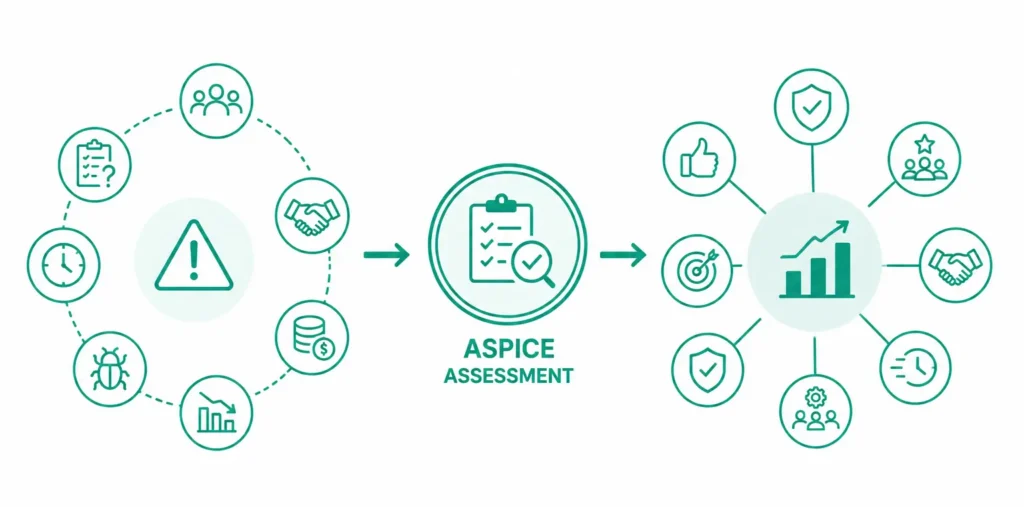
Modern automotive development involves multiple engineering disciplines, globally distributed teams, extensive supplier collaboration, and strict safety and cybersecurity requirements.
Without standardized engineering processes, organizations often experience challenges such as:
- Inconsistent engineering practices
- Poor requirements traceability
- Delayed project deliveries
- Higher software defect rates
- Difficult supplier collaboration
- Compliance risks
- Increased development costs
ASPICE assessments help organizations identify these gaps before they affect project outcomes. More importantly, they provide a structured roadmap for strengthening engineering maturity and continuously improving development processes.
Key benefits of ASPICE assessments include:
- Improved software and systems quality
- Better engineering governance
- Greater customer confidence
- Stronger supplier credibility
- Faster assessment readiness
- Reduced engineering risks
- More predictable project delivery
- Improved collaboration across engineering teams
Organizations that treat ASPICE as a continuous improvement initiative rather than a compliance requirement typically achieve greater long-term engineering success.
Understanding ASPICE Capability Levels
ASPICE capability levels measure how effectively engineering processes are performed and managed. They do not evaluate the quality of a specific software product. Instead, they assess whether engineering activities are consistent, repeatable, and continuously improving.
There are six capability levels, ranging from Level 0 to Level 5.
Capability Level 0: Incomplete Process
At Capability Level 0, engineering processes are either missing or inconsistently applied.
Typical characteristics include:
- No standardized engineering process
- Activities depend on individual effort
- Limited documentation
- Inconsistent project outcomes
- High engineering risk
Organizations at this level often struggle to maintain repeatability and process control.
Capability Level 1: Performed Process
At Level 1, engineering activities achieve their intended purpose, but execution varies from one project to another.
Typical characteristics include:
- Engineering activities are completed
- Required work products are created
- Limited management oversight
- Processes differ across teams
- Minimal governance
Although engineering work is performed successfully, organizations may still face inconsistencies due to the absence of standardized practices.
Capability Level 2: Managed Process
Capability Level 2 introduces structured planning and project management practices.
Engineering activities become planned, monitored, reviewed, and controlled throughout the development lifecycle.
Key characteristics include:
- Project planning
- Defined responsibilities
- Configuration management
- Work product management
- Progress monitoring
- Engineering reviews
- Documented approvals
Most automotive OEMs expect suppliers to achieve Capability Level 2 for critical engineering process areas because it demonstrates that engineering processes are effectively managed.
Capability Level 3: Established Process
At Capability Level 3, engineering processes become standardized across the entire organization instead of being defined separately for individual projects.
Organizations typically establish:
- Organization-wide engineering standards
- Standard operating procedures
- Documented workflows
- Training programs
- Consistent implementation practices
Capability Level 3 demonstrates that engineering maturity is embedded throughout the organization rather than depending on individual teams or projects.
Capability Level 4: Predictable Process
Organizations operating at Capability Level 4 use quantitative data to measure and control engineering performance.
Common engineering metrics include:
- Defect trends
- Requirements stability
- Test coverage
- Build success rates
- Automation coverage
- Engineering cycle time
- Review completion rates
Using measurable data allows engineering teams to identify issues early and make informed decisions that improve project predictability.
Capability Level 5: Optimizing Process
Capability Level 5 represents the highest level of engineering maturity.
Organizations continuously improve engineering performance by adopting modern practices and advanced technologies such as:
- Artificial Intelligence
- Process automation
- Embedded DevOps
- Advanced analytics
- Continuous improvement
- Data-driven decision making
- Engineering innovation
Although relatively few organizations formally pursue Capability Level 5, its principles help create highly efficient and continuously improving engineering environments.
ASPICE Assessment Scope
An ASPICE Level Assessment does not always cover every engineering process. Instead, the assessment scope is defined based on customer expectations, project requirements, and business objectives. Automotive OEMs often select specific process areas that are critical to the products or services being delivered.
The assessment generally focuses on four major process groups.
System Engineering (SYS)
The System Engineering process group evaluates how organizations transform customer needs into complete system solutions.
Commonly assessed processes include:
- SYS.1 System Requirements Analysis
- SYS.2 System Architecture Design
- SYS.3 System Design
- SYS.4 System Integration
- SYS.5 System Qualification Testing
These processes ensure that system requirements are clearly defined, validated, implemented, and verified throughout the engineering lifecycle.
Software Engineering (SWE)
Since modern vehicles depend heavily on embedded software, the Software Engineering process group receives significant attention during ASPICE assessments.
Typical process areas include:
- SWE.1 Software Requirements Analysis
- SWE.2 Software Architecture Design
- SWE.3 Software Detailed Design
- SWE.4 Software Construction
- SWE.5 Software Integration and Integration Testing
- SWE.6 Software Qualification Testing
Engineering teams must demonstrate that software development follows a structured and traceable process from requirements through testing.
For organizations developing modern vehicle platforms, understanding the Software-Defined Vehicle development lifecycle helps establish engineering workflows that align with ASPICE expectations while supporting continuous software delivery.
Supporting Processes (SUP)
Supporting processes ensure engineering activities remain controlled, documented, and repeatable.
Frequently assessed supporting processes include:
- Configuration Management
- Quality Assurance
- Change Management
- Problem Resolution Management
- Peer Reviews
These processes help maintain engineering quality while ensuring every work product can be tracked and audited.
Management Processes (MAN)
Management processes evaluate how engineering projects are planned, monitored, and measured.
Common assessment areas include:
- Project Management
- Risk Management
- Measurement and Metrics
Effective management practices improve project visibility, reduce engineering risks, and support predictable delivery schedules.
How an ASPICE Assessment Is Conducted
An ASPICE Level Assessment follows a structured methodology that enables assessors to evaluate engineering maturity objectively. Each phase focuses on gathering evidence that demonstrates how engineering processes are implemented across projects.
Step 1: Assessment Planning
Every assessment begins by defining its scope and objectives.
During this phase, organizations identify:
- Projects to be assessed
- Process areas
- Assessment participants
- Engineering teams
- Assessment schedule
- Required documentation
Proper planning ensures engineering evidence is available before the assessment begins.
Step 2: Documentation Review
Assessors review engineering documentation to understand how processes are defined and implemented.
Typical documents include:
- Requirement specifications
- Architecture documents
- Design specifications
- Test plans
- Configuration records
- Change requests
- Project plans
- Quality records
The objective is to verify that documented engineering practices align with ASPICE requirements.
Step 3: Engineering Interviews
Documentation alone is not sufficient.
Assessors interview engineering teams to understand how processes are actually executed during day-to-day development activities.
Participants often include:
- Project Managers
- Systems Engineers
- Software Architects
- Software Developers
- Test Engineers
- Quality Managers
- Configuration Managers
These discussions help determine whether documented processes are consistently followed in practice.
Step 4: Evidence Verification
Assessors compare engineering practices with documented procedures and verify that objective evidence supports every evaluated process.
Examples include:
- Requirements traceability
- Review records
- Test execution reports
- Change approvals
- Configuration baselines
- Version history
- Defect management records
Organizations that maintain integrated engineering environments generally find this stage much easier because information is centrally managed and easily traceable.
Step 5: Capability Rating
Once sufficient evidence has been collected, assessors evaluate each selected process area against the Automotive SPICE Process Assessment Model (PAM).
Capability ratings are based on:
- Process performance
- Engineering evidence
- Process consistency
- Management practices
- Achievement of process attributes
Each process area receives an individual capability rating rather than a single score for the organization.
Step 6: Gap Analysis and Improvement Roadmap
The final stage identifies opportunities for improvement.
Assessment findings typically include:
- Engineering strengths
- Process gaps
- Risks
- Recommended improvements
- Target capability levels
- Priority actions
Most organizations use these findings to create a structured roadmap for improving engineering maturity before future customer assessments.
Engineering Evidence Required During an ASPICE Assessment
One of the most common misconceptions is that ASPICE assessments focus only on documentation.
In reality, assessors expect objective evidence demonstrating that engineering processes are consistently performed across projects.
Typical engineering evidence includes:
| Process Area | Typical Evidence |
|---|---|
| Requirements Management | System and Software Requirement Specifications |
| Architecture | System Architecture Documents, Software Architecture Documents |
| Design | Detailed Design Specifications, UML and SysML Models |
| Software Development | Source Code, Code Review Records, Static Analysis Reports |
| Testing | Test Plans, Test Cases, Test Results, Coverage Reports |
| Configuration Management | Configuration Baselines, Version History, Release Records |
| Change Management | Change Requests, Impact Analysis, Approval Records |
| Quality Assurance | Audit Reports, Compliance Reports |
| Traceability | Requirement-to-Test Traceability Matrix |
| Project Management | Project Plans, Risk Registers, Engineering Metrics |
Maintaining connected engineering data is becoming increasingly important as organizations adopt Digital Engineering for Automotive to improve collaboration, traceability, and lifecycle visibility across engineering disciplines.
Common Reasons Organizations Lose Capability Ratings
Many organizations have well-defined engineering processes but still receive lower capability ratings because execution is inconsistent.
Some of the most common issues include:
- Missing requirements traceability
- Incomplete engineering documentation
- Weak change management practices
- Limited peer review evidence
- Poor configuration management
- Manual engineering workflows
- Inconsistent process implementation
- Insufficient engineering metrics
These challenges become even more significant in Software-Defined Vehicle engineering, where software complexity, connected systems, and continuous feature delivery require highly integrated engineering processes.
Best Practices for Assessment Readiness
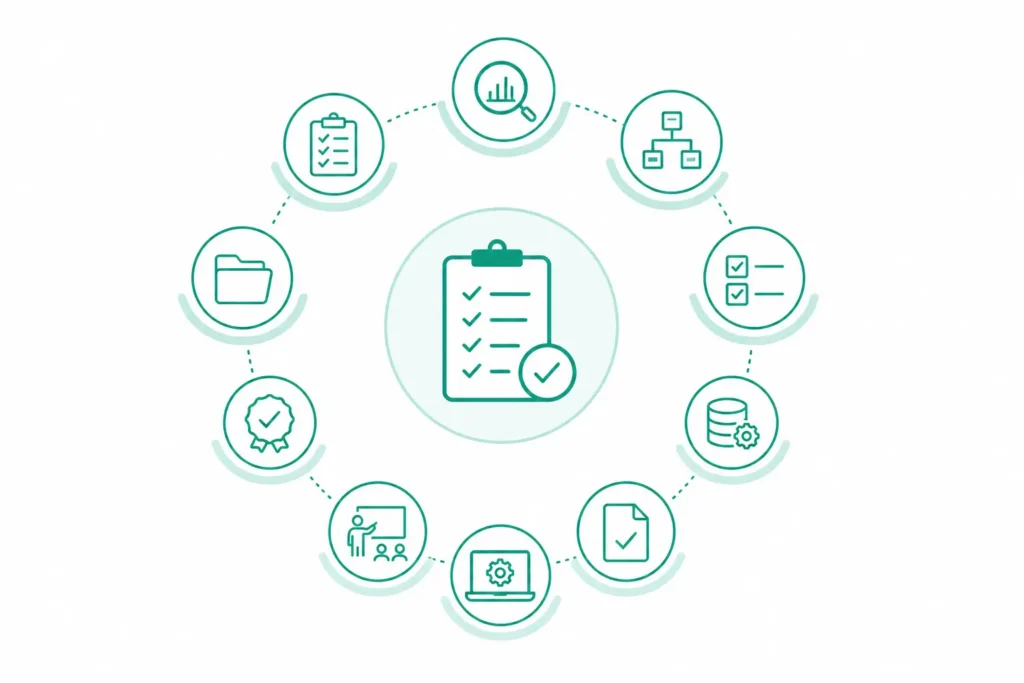
Organizations preparing for an ASPICE assessment can significantly improve their readiness by following proven engineering practices.
Some recommended best practices include:
- Conduct an internal gap assessment before the formal evaluation.
- Standardize engineering processes across all projects.
- Establish complete requirements-to-test traceability.
- Maintain configuration baselines throughout development.
- Document engineering reviews and approvals.
- Automate evidence collection wherever possible.
- Train engineering teams on organizational processes.
- Perform mock assessments to identify improvement opportunities.
Modern engineering organizations also benefit from implementing an integrated SDV toolchain architecture that connects requirements management, systems engineering, software development, testing, DevOps, and release management into a unified engineering environment.
Tools That Support ASPICE Assessments
Preparing for an ASPICE assessment becomes significantly easier when organizations use an integrated engineering toolchain instead of disconnected spreadsheets and standalone documents. Connected tools help maintain traceability, automate workflows, improve collaboration, and provide the engineering evidence required during assessments.
Common tools that support ASPICE implementation include:
| Engineering Activity | Common Tools |
|---|---|
| Requirements Management | IBM DOORS Next, PTC Codebeamer |
| Systems Engineering | IBM Rhapsody, Cameo Systems Modeler |
| Application Lifecycle Management | IBM Engineering Lifecycle Management (ELM), Codebeamer, Polarion ALM |
| Agile Planning | Jira |
| Source Code Management | Git, GitLab |
| Continuous Integration | Jenkins, GitLab CI/CD |
| Test Management | IBM Engineering Test Management (ETM), TestRail |
| Product Lifecycle Management | Siemens Teamcenter, PTC Windchill |
By integrating these tools, organizations can improve engineering visibility, strengthen collaboration, and simplify assessment readiness while maintaining complete lifecycle traceability.
How MicroGenesis Helps
Successfully preparing for an ASPICE Level Assessment requires more than documentation. It demands standardized engineering processes, integrated tools, end-to-end traceability, and experienced implementation partners.
MicroGenesis helps automotive OEMs, Tier 1 suppliers, and engineering organizations build ASPICE-aligned engineering environments that improve process maturity and assessment readiness.
Our capabilities include:
- ASPICE gap assessments
- Process improvement consulting
- IBM Engineering Lifecycle Management (IBM ELM) implementation
- IBM DOORS Next implementation
- PTC Codebeamer implementation
- Engineering traceability
- Engineering toolchain integration
- Embedded DevOps enablement
- Model-Based Systems Engineering (MBSE)
- Digital Thread implementation
- Managed Engineering Services
With more than 25 years of engineering transformation experience, MicroGenesis enables organizations to improve software quality, accelerate engineering delivery, simplify compliance, and build scalable engineering environments that support long-term business growth.
Frequently Asked Questions
What is an ASPICE Level Assessment?
An ASPICE Level Assessment is a structured evaluation that measures the maturity and capability of engineering processes against the Automotive SPICE Process Assessment Model (PAM). The assessment focuses on how engineering work is performed rather than evaluating only the final software product.
What capability level do most automotive OEMs require?
Most automotive OEMs expect suppliers to demonstrate Capability Level 2 or Capability Level 3 for selected engineering process areas. The required level depends on the project scope, product complexity, and customer expectations.
How long does an ASPICE assessment take?
The duration varies based on the number of process areas being assessed, project complexity, and organizational maturity. Assessments typically take several days to a few weeks, including planning, interviews, documentation review, and evidence verification.
Is ASPICE a certification?
No. ASPICE is not a certification program. Organizations receive capability ratings for the individual process areas that are assessed rather than an overall certification.
What evidence is required during an ASPICE assessment?
Assessors review objective engineering evidence such as:
- Requirements specifications
- Architecture documents
- Design specifications
- Source code
- Test plans and reports
- Traceability matrices
- Configuration records
- Change requests
- Quality assurance reports
- Project plans and engineering metrics
This evidence demonstrates that engineering processes are consistently implemented across projects.
How can organizations improve assessment readiness?
Organizations can improve their readiness by standardizing engineering processes, maintaining end-to-end traceability, automating engineering workflows, conducting internal gap assessments, and using integrated engineering tools that support collaboration and lifecycle management.
Conclusion
ASPICE Level Assessments have become an essential part of modern automotive engineering. As vehicles continue to evolve into software-driven platforms, engineering organizations must demonstrate that their development processes are structured, repeatable, and capable of delivering high-quality products consistently.
Rather than viewing ASPICE as a compliance requirement, organizations should treat it as a framework for continuous engineering improvement. Well-defined processes, complete traceability, effective governance, and connected engineering tools help reduce project risks, improve collaboration, and increase customer confidence.
By integrating Engineering Lifecycle Management (ELM), Model-Based Systems Engineering (MBSE), Embedded DevOps, Digital Thread practices, and a connected engineering toolchain, organizations can strengthen engineering maturity while preparing for successful ASPICE assessments. Investing in these capabilities not only supports higher capability levels but also creates a strong foundation for developing the next generation of Software-Defined Vehicles and future automotive innovations.