

Implementing Automotive SPICE (ASPICE) is more than preparing for an assessment or creating additional documentation. It is a structured engineering transformation that helps organizations standardize development processes, improve collaboration, strengthen governance, and consistently deliver high-quality automotive software.
Many organizations begin their ASPICE journey because automotive OEMs require a specific capability level. However, they quickly discover that effective implementation delivers benefits far beyond assessment readiness. A mature ASPICE environment improves engineering visibility, reduces software defects, enhances supplier collaboration, supports regulatory compliance, and accelerates product development.
As the automotive industry shifts toward Software-Defined Vehicles, engineering teams must manage increasingly complex software architectures, faster release cycles, and stricter quality expectations. ASPICE provides the framework needed to build scalable and repeatable engineering processes that support these evolving demands.
Despite its advantages, implementing ASPICE can be challenging. Organizations often struggle with fragmented engineering tools, inconsistent processes, limited traceability, and resistance to organizational change. Without a structured roadmap, implementation initiatives can become costly, time-consuming, and difficult to sustain.
This guide outlines a practical ASPICE implementation roadmap that helps automotive OEMs, Tier 1 suppliers, and engineering organizations improve engineering maturity, strengthen governance, and achieve long-term process excellence.
Why Organizations Need an ASPICE Implementation Roadmap
Many organizations assume that implementing ASPICE simply involves purchasing an Application Lifecycle Management (ALM) platform or documenting existing engineering processes. In reality, ASPICE is a business and engineering transformation initiative that requires alignment between people, processes, technology, and governance.
A well-defined implementation roadmap helps organizations:
- Understand their current engineering maturity
- Define realistic improvement objectives
- Prioritize high-impact process areas
- Reduce implementation risks
- Improve assessment readiness
- Standardize engineering practices
- Establish a culture of continuous improvement
Organizations that take a structured approach avoid automating inefficient processes and instead build a strong foundation for sustainable engineering excellence.
Many organizations also leverage Automotive Process Consulting to assess current engineering practices, define implementation strategies, and accelerate ASPICE adoption with proven industry best practices.
The ASPICE Implementation Lifecycle
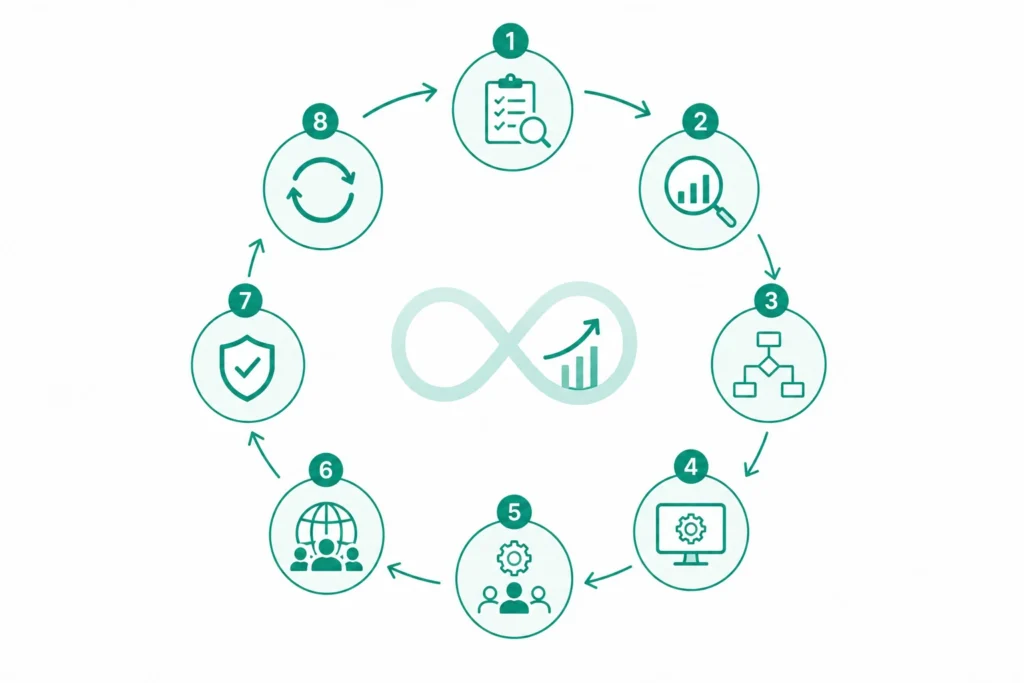
ASPICE implementation is best approached as a phased transformation rather than a one-time project. Each phase builds on the previous one, helping organizations improve engineering maturity while minimizing implementation risks.
A typical implementation lifecycle includes:
Current State Assessment
↓
Gap Analysis
↓
Process Design
↓
Toolchain Implementation
↓
Pilot Project
↓
Organization-wide Rollout
↓
Assessment Preparation
↓
Continuous Improvement
Organizations developing modern vehicle platforms often align these implementation phases with the SDV Development Lifecycle to ensure engineering processes support evolving software requirements, continuous integration, and long-term lifecycle management.
Phase 1: Assess the Current Engineering Environment
Every successful ASPICE implementation begins with a thorough evaluation of the organization’s existing engineering environment.
The objective of this phase is to establish a clear baseline of current engineering maturity before introducing new processes or technologies.
Key activities include:
- Reviewing engineering processes
- Mapping existing development workflows
- Evaluating engineering documentation
- Assessing engineering tools
- Reviewing project governance
- Measuring traceability capabilities
- Evaluating software development practices
- Reviewing testing methodologies
Some important questions to consider are:
- Are engineering processes standardized across projects?
- How are requirements captured and managed?
- Is end-to-end traceability established?
- How are engineering changes controlled?
- Are engineering metrics collected consistently?
- Do teams follow documented development processes?
The outcome of this phase is a current-state assessment report that identifies strengths, weaknesses, and opportunities for improvement.
Phase 2: Perform an ASPICE Gap Analysis
Once the current engineering environment has been assessed, the next step is to compare existing practices against ASPICE requirements.
A gap analysis helps organizations understand where engineering processes meet expectations and where improvements are needed.
Typical activities include:
- Process mapping
- Engineering artifact reviews
- Team interviews
- Process capability evaluation
- Documentation assessment
- Risk identification
The analysis focuses on identifying:
- Existing strengths
- Missing engineering practices
- Documentation gaps
- Tool limitations
- Process inconsistencies
- Organizational risks
The results of the gap analysis should be prioritized based on customer expectations, regulatory requirements, and business objectives, allowing organizations to focus on improvements that deliver the greatest value.
Phase 3: Define the Target Capability Level
Not every organization needs to achieve Capability Level 5. The appropriate target depends on customer expectations, product complexity, safety requirements, and long-term business goals.
Typical capability targets include:
| Organization Type | Typical Target |
|---|---|
| Automotive Startup | CL1 to CL2 |
| Tier 2 Supplier | CL2 |
| Tier 1 Supplier | CL2 to CL3 |
| Global Automotive OEM | CL3 and above |
Clearly defining the target capability level helps organizations:
- Allocate resources effectively
- Prioritize process improvements
- Develop realistic implementation plans
- Avoid unnecessary complexity
- Align engineering investments with customer requirements
Establishing achievable milestones also makes it easier to measure progress and demonstrate continuous improvement throughout the ASPICE implementation journey.
Phase 4: Standardize Engineering Processes
After identifying process gaps and defining target capability levels, the next step is to establish standardized engineering processes across the organization. Consistent processes reduce project variability, improve collaboration, and ensure engineering teams follow the same development practices regardless of project size or complexity.
Standardization should cover every stage of the engineering lifecycle, from requirements management to testing and release.
Requirements Management
Requirements form the foundation of every automotive development project. Organizations should establish clear processes for capturing, reviewing, approving, and managing requirements throughout the product lifecycle.
Key activities include:
- Standardized requirement templates
- Requirement review workflows
- Approval processes
- Version control
- Traceability guidelines
- Change management procedures
Well-defined requirements management practices reduce ambiguity and improve communication between stakeholders.
Systems Engineering
Systems engineering processes should be standardized to ensure consistency across product architecture and system design activities.
Typical areas include:
- System architecture development
- Interface definition
- System modeling
- Integration planning
- Design reviews
- Verification planning
Organizations adopting MBSE Consulting Services can further strengthen systems engineering by using model-based approaches to improve collaboration, design accuracy, and lifecycle traceability.
Software Development
Software development processes should be governed by consistent engineering standards that promote quality and maintainability.
Recommended practices include:
- Coding standards
- Branching strategies
- Code review processes
- Static code analysis
- Build management
- Release management
Standardized software development practices help reduce defects while improving engineering productivity.
Test Management
Testing processes should ensure that every requirement is verified and validated before product release.
Standard test management activities include:
- Test planning
- Test case development
- Test execution
- Defect tracking
- Test reporting
- Regression testing
A structured testing process improves product quality and supports assessment readiness.
Supporting Processes
Supporting processes help maintain consistency across engineering projects.
These commonly include:
- Configuration Management
- Change Management
- Problem Resolution Management
- Quality Assurance
- Engineering Reviews
Standardizing these supporting activities enables organizations to establish repeatable engineering practices and improve overall governance.
Phase 5: Build End-to-End Engineering Traceability
Engineering traceability is one of the core principles of ASPICE implementation. It provides complete visibility into how customer requirements evolve throughout the engineering lifecycle.
Organizations should establish traceability between:
Customer Requirements
↓
System Requirements
↓
Software Requirements
↓
System Architecture
↓
Source Code
↓
Test Cases
↓
Validation
↓
Release
Complete traceability enables organizations to:
- Perform change impact analysis
- Improve compliance reporting
- Simplify root cause analysis
- Strengthen audit readiness
- Improve engineering visibility
Maintaining connected engineering information is a key objective of Digital Engineering for Automotive, enabling organizations to improve collaboration, reduce manual effort, and establish a unified engineering environment.
Phase 6: Implement an Integrated Engineering Toolchain
Technology alone does not ensure ASPICE compliance, but an integrated engineering toolchain significantly improves process execution, collaboration, and traceability.
A typical engineering environment includes:
| Engineering Function | Common Tools |
|---|---|
| Requirements Management | IBM DOORS Next, PTC Codebeamer |
| Systems Engineering | IBM Rhapsody, Cameo Systems Modeler |
| Workflow Management | IBM Engineering Workflow Management (EWM), Jira |
| Source Code Management | Git, GitLab |
| Continuous Integration | Jenkins, GitLab CI/CD |
| Test Management | IBM Engineering Test Management (ETM), TestRail |
| Product Lifecycle Management | PTC Windchill, Siemens Teamcenter |
Organizations implementing IBM Engineering Lifecycle Management (IBM ELM) can connect requirements management, change management, testing, reporting, and engineering collaboration within a unified platform, simplifying ASPICE implementation and improving lifecycle visibility.
Similarly, PTC Codebeamer provides a modern Application Lifecycle Management (ALM) platform that helps organizations manage requirements, risks, quality, and compliance while supporting ASPICE and other safety-critical development standards.
An integrated engineering environment aligned with a modern SDV Toolchain Architecture helps engineering teams connect systems engineering, software development, testing, DevOps, and release management into a seamless workflow.
Phase 7: Train Engineering Teams
Engineering transformation is successful only when teams understand the new processes and consistently apply them in their daily work.
Training programs should be tailored to individual roles and responsibilities.
Typical training topics include:
- ASPICE fundamentals
- Organizational engineering processes
- Requirements management
- Engineering traceability
- Configuration management
- Change management
- Engineering tools
- Assessment preparation
Role-specific training for project managers, systems engineers, software developers, testers, quality engineers, and configuration managers improves process adoption and reduces implementation risks.
Phase 8: Run a Pilot Project
Rather than deploying ASPICE across every project simultaneously, organizations should begin with a pilot implementation.
A pilot project provides an opportunity to validate new processes, templates, governance models, and tool integrations before expanding implementation across the organization.
Typical pilot objectives include validating:
- Engineering workflows
- Tool integrations
- Process templates
- Governance practices
- Traceability implementation
- Engineering dashboards and reports
Lessons learned during the pilot should be documented and incorporated into organizational processes before full-scale deployment.
A successful pilot creates confidence among stakeholders while reducing the risks associated with enterprise-wide implementation.
Phase 9: Roll Out ASPICE Across the Organization
After validating processes and workflows through a successful pilot project, organizations can begin deploying standardized engineering practices across multiple teams, projects, and business units.
A structured rollout ensures that every project follows consistent engineering processes while maintaining governance and quality standards.
Key activities during this phase include:
- Deploying standardized engineering processes
- Implementing common templates and workflows
- Monitoring process adoption
- Reviewing engineering metrics
- Providing coaching and ongoing support
- Conducting governance and compliance reviews
Consistent implementation across projects is essential for organizations targeting Capability Level 3 and above, where engineering processes must be well defined, standardized, and consistently applied.
Phase 10: Prepare for the ASPICE Assessment
Assessment preparation should begin well before the formal ASPICE evaluation. Organizations should focus on demonstrating that engineering processes are consistently followed across projects rather than simply collecting documentation.
Preparation activities typically include:
- Conducting internal process assessments
- Reviewing engineering work products
- Verifying end-to-end traceability
- Validating engineering documentation
- Performing mock interviews
- Reviewing engineering metrics
- Identifying and addressing remaining process gaps
Organizations that continuously monitor engineering processes throughout implementation are generally better prepared for formal assessments and customer audits.
Common Challenges During ASPICE Implementation
ASPICE implementation often requires significant organizational change. While technical improvements are important, many implementation challenges arise from process adoption and organizational alignment rather than technology alone.
Limited Executive Sponsorship
Successful process transformation requires active leadership support. Without executive sponsorship, implementation efforts may lose momentum, resulting in inconsistent adoption across teams.
Leaders should communicate the long-term business value of ASPICE and ensure adequate resources are available throughout the implementation journey.
Treating ASPICE as a Documentation Exercise
One of the most common misconceptions is that ASPICE is primarily about creating documents.
In reality, assessors evaluate how engineering processes are executed in day-to-day project activities. Documentation supports these activities, but it cannot replace effective engineering practices.
Weak Engineering Traceability
Disconnected engineering artifacts make it difficult to understand relationships between requirements, design, implementation, testing, and validation.
Incomplete traceability reduces project visibility, complicates change management, and increases assessment risk.
Disconnected Engineering Tools
Organizations using multiple standalone tools often experience data silos, duplicate information, and manual handoffs between teams.
Integrating engineering platforms improves collaboration, reduces manual effort, and establishes a single source of truth across the engineering lifecycle.
Resistance to Organizational Change
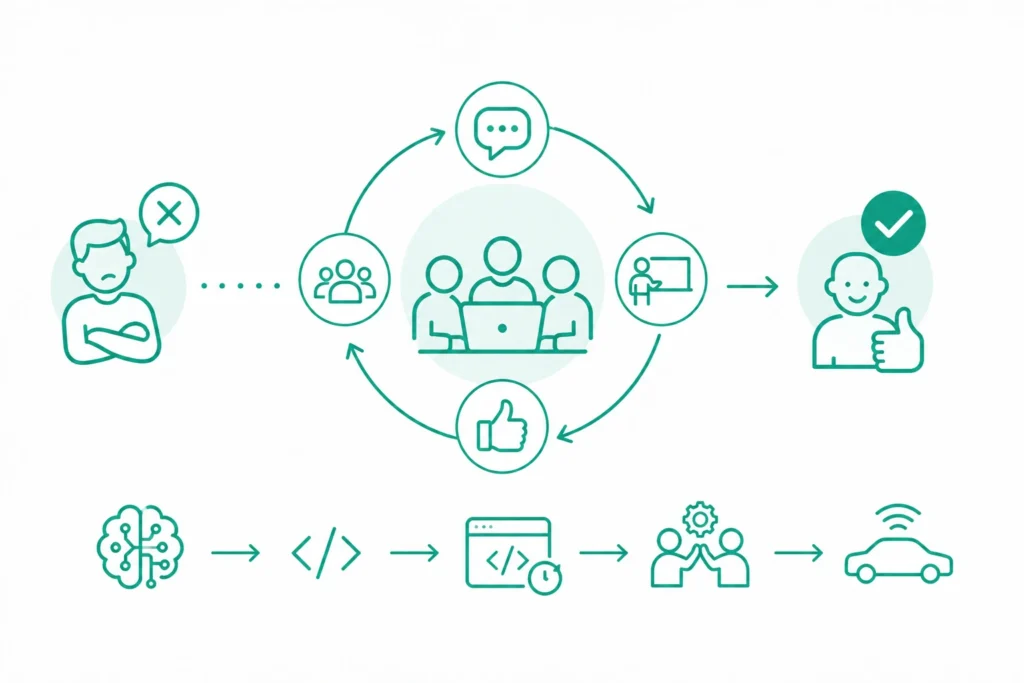
Engineers may initially perceive ASPICE as additional administrative work or unnecessary process overhead.
Successful organizations address this challenge by involving engineering teams early, explaining the business benefits, providing role-based training, and encouraging continuous feedback throughout implementation.
Many of these issues become more evident as organizations address modern SDV Engineering Challenges, including increasing software complexity, frequent feature releases, and cross-functional engineering collaboration.
Best Practices for a Successful ASPICE Implementation
Organizations that achieve long-term success with ASPICE generally follow a structured and disciplined implementation approach.
Recommended best practices include:
- Begin with a formal engineering maturity assessment.
- Standardize engineering processes before introducing new tools.
- Establish end-to-end traceability from the beginning.
- Automate repetitive engineering activities wherever possible.
- Integrate engineering tools instead of relying on isolated systems.
- Define measurable engineering performance indicators.
- Conduct regular internal assessments and process reviews.
- Treat ASPICE as an ongoing improvement initiative rather than a one-time compliance project.
Organizations that integrate Embedded DevOps Services into their engineering environment can further improve collaboration, automate software delivery pipelines, and maintain traceability throughout the development lifecycle.
Measuring ASPICE Implementation Success
Organizations should establish measurable Key Performance Indicators (KPIs) to evaluate the effectiveness of their implementation efforts.
Common engineering metrics include:
- Requirements traceability coverage
- Test coverage
- Defect density
- Review completion rate
- Build success rate
- Change request turnaround time
- Process compliance findings
- Assessment readiness
- Capability level improvements
Tracking these metrics helps engineering leaders measure process maturity, identify improvement opportunities, and demonstrate the business value of ASPICE implementation.
How Engineering Lifecycle Management Supports ASPICE
Engineering Lifecycle Management (ELM) platforms simplify ASPICE implementation by connecting engineering activities across the entire product lifecycle.
Key benefits include:
- Centralized requirements management
- Automated traceability
- Workflow automation
- Integrated test management
- Configuration management
- Real-time reporting and dashboards
- Audit-ready engineering evidence
Instead of maintaining engineering information across disconnected systems, an integrated ELM platform provides a unified environment that improves collaboration, governance, and engineering visibility.
How MicroGenesis Helps
MicroGenesis helps automotive OEMs, Tier 1 suppliers, and engineering organizations accelerate ASPICE adoption through consulting, engineering transformation, and lifecycle management expertise.
Our capabilities include:
- ASPICE readiness assessments
- Gap analysis and implementation roadmaps
- Automotive Process Consulting
- IBM Engineering Lifecycle Management
- IBM DOORS Next implementation
- PTC CodeBeamer implementation
- Engineering Traceability
- Embedded DevOps implementation
- Engineering Toolchain Integration
- Model-Based Systems Engineering (MBSE)
- Digital Thread implementation
- Managed Engineering Services
With over 25 years of engineering transformation experience, MicroGenesis helps organizations modernize engineering processes, improve assessment readiness, strengthen collaboration, and build scalable engineering ecosystems aligned with ASPICE best practices.
Frequently Asked Questions
How long does ASPICE implementation take?
The implementation timeline depends on factors such as organizational size, current engineering maturity, project complexity, and target capability level. Smaller implementations may take several months, while enterprise-wide transformations can extend from one to three years.
What is the first step in implementing ASPICE?
The first step is conducting a current-state assessment and gap analysis to understand existing engineering capabilities, identify improvement areas, and define a structured implementation roadmap.
Do organizations need new tools to implement ASPICE?
Not necessarily. Many organizations can optimize or integrate their existing engineering tools. However, platforms such as IBM Engineering Lifecycle Management (IBM ELM), IBM DOORS Next, and PTC Codebeamer can simplify traceability, collaboration, and lifecycle management.
Can Agile and DevOps coexist with ASPICE?
Yes. Agile development and DevOps practices can successfully coexist with ASPICE when supported by appropriate governance, engineering traceability, and standardized development processes.
What is the biggest challenge during ASPICE implementation?
The biggest challenge is often organizational change. Aligning people, processes, and technology while maintaining ongoing project delivery requires strong leadership, effective communication, and continuous engagement across engineering teams.
Conclusion
ASPICE implementation is a long-term engineering transformation that goes far beyond preparing for an assessment. Organizations that follow a structured roadmap can improve engineering maturity, standardize development processes, strengthen collaboration, and build a foundation for continuous improvement.
A successful implementation begins with understanding current engineering capabilities, followed by process standardization, end-to-end traceability, integrated engineering tools, and organization-wide adoption. These practices help organizations improve software quality, reduce development risks, and meet the expectations of automotive OEMs.
As the automotive industry continues to evolve toward software-centric vehicles and increasingly complex engineering environments, ASPICE provides the framework needed to support scalable, compliant, and high-quality product development. Combined with Engineering Lifecycle Management, Model-Based Systems Engineering, Embedded DevOps, and Digital Thread practices, organizations can accelerate innovation while maintaining the engineering discipline required to succeed in modern automotive development.